Science vs. Screwworms: How UT Research Inspired Our Best Weapon
Key to earlier eradications of the threat was a University of Texas discovery that’s still proving useful today.
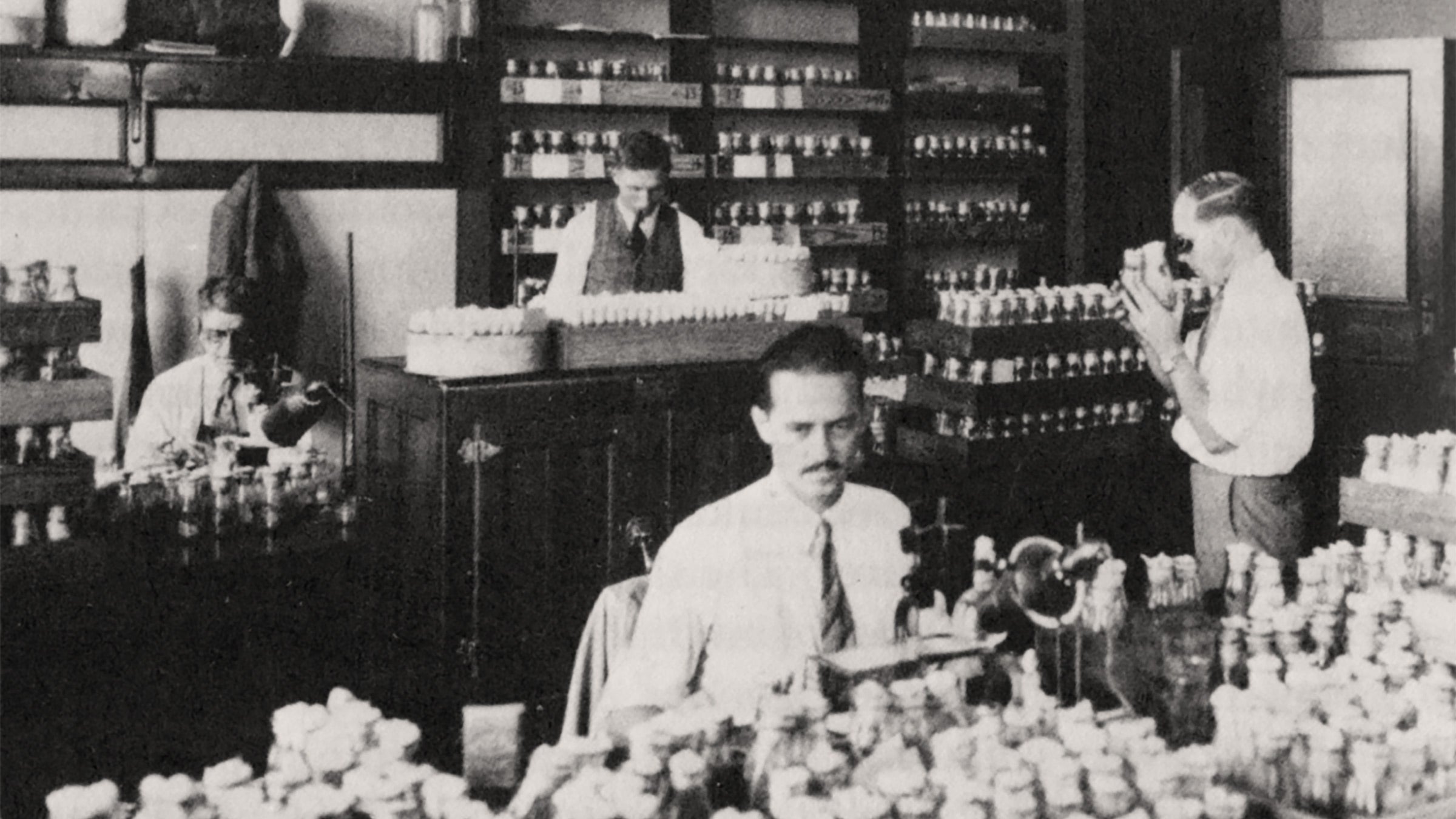
The “fly room” in the Bio Building on UT’s campus. T.S. Painter, future university president, sits to the left in the back; C.P. Oliver, UT graduate student, sits front; and Hermann Muller (right) views fruit flies through his jeweler’s loupe. Photo courtesy of Lilly Library, Indiana University, Bloomington, Indiana.
You’ve probably seen dire headlines about a small but growing outbreak of New World screwworms centered in Texas, threatening livestock and other animals. The U.S. Department of Agriculture is currently estimating that if the new outbreak grows as large as the last major outbreak, it could cost the Texas economy $1.8 billion.
The scientific breakthrough that has been used repeatedly to eradicate this pest has an important University of Texas at Austin connection.
“Scientists at UT have a proud history of seeing some very important developments for society follow from the basic scientific research that has happened on our campus,” said David Hillis, the Roark Centennial Professor in the Department of Integrative Biology and director of UT’s Biodiversity Center. “The story of the screwworms’ eradication is a perfect example.”
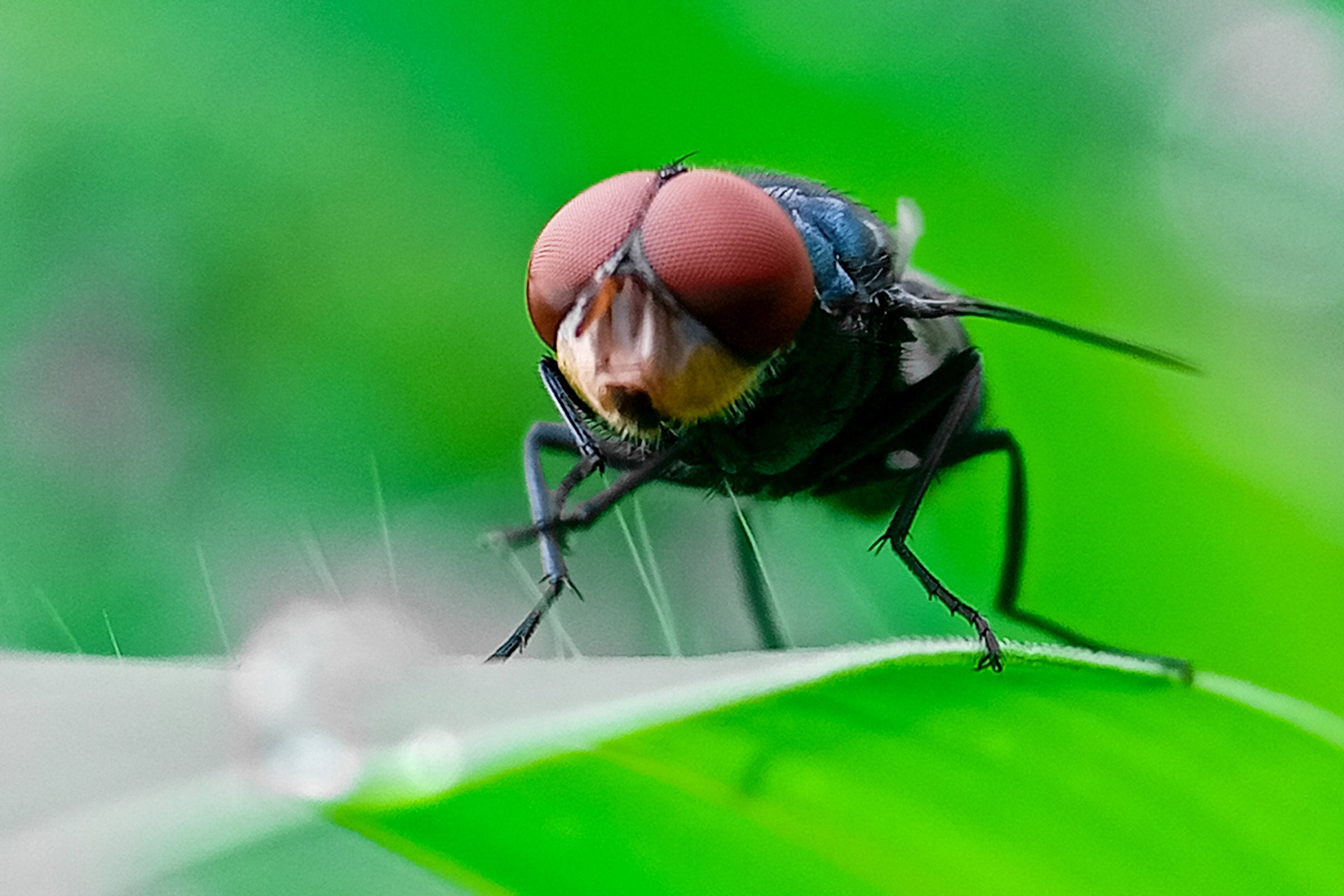
The New World screwworm (Cochliomyia hominivorax) is a parasitic fly that is well known for the way in which its larvae eat the living tissue of animals. Source: stock photo.
In the 20th century, scientific experts, U.S. ranchers and public officials were scrambling to beat back a devastating pest over a period of decades. During their flying stage, screwworm flies lay their eggs in open wounds and body openings of animals; their offspring grow into flesh-eating larvae. Left untreated, they can kill their hosts within days.
Back in the 1930s and ’40s, screwworms had become a nightmare for ranchers across the southern U.S., costing up to $10 million annually, which would translate to hundreds of millions in today’s dollars. USDA entomologists Edward Knipling and Raymond Bushland experimented on screwworms, desperately searching for a possible treatment, but with little luck. They speculated that if they could somehow sterilize millions of male screwworm flies and release them in infected areas, females — that only mate once in their lives — would produce no offspring. That could mean local eradication of screwworms. But the researchers couldn’t figure out how to reliably sterilize a multitude of male screwworm flies.
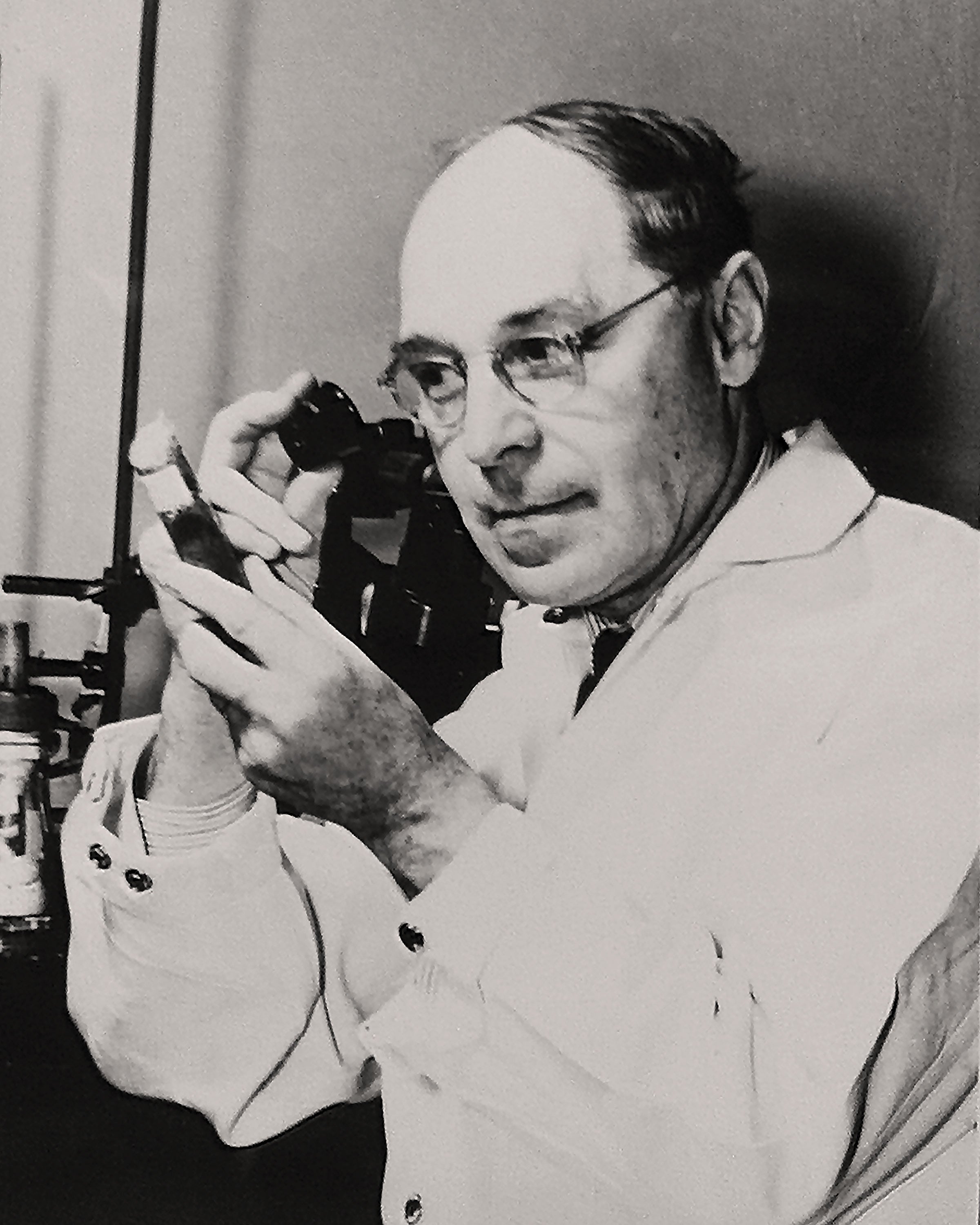
Hermann Muller using his jeweler's loupe to view fruit flies. Photo from the UT Zoology Archive, Dolph Briscoe Center for American History, The University of Texas at Austin.
Their break came in 1950, when Knipling read about work led by University of Texas geneticist Hermann Muller, whose research on X-ray radiation in fruit flies ultimately landed him a Nobel Prize. Muller was the first to show that X-ray radiation could cause genetic mutations. He also discovered that a certain level of radiation could cause fruit flies to become sterile without killing them. As the UT Austin Biodiversity Center recounted in a 2020 feature story, Knipling wrote to Muller, asking whether employing the X-ray technique to sterilize screwworms might work. Muller replied that he thought it would. Using a hospital X-ray machine, the USDA scientists learned to apply enough radiation to sterilize the flies but not so much that the flies would be unable to mate or attract a mate.
By the middle of the century, their sterile insect technique was used in Florida to wipe out screwworms there. Then by the 1960s, federal and state governments eradicated screwworms from Texas and bordering states, although occasional reintroductions of the pest from other countries have occurred. When that happens, efforts to snuff out these reinvasions and protect livestock in the U.S. have relied heavily on the sterile insect technique.
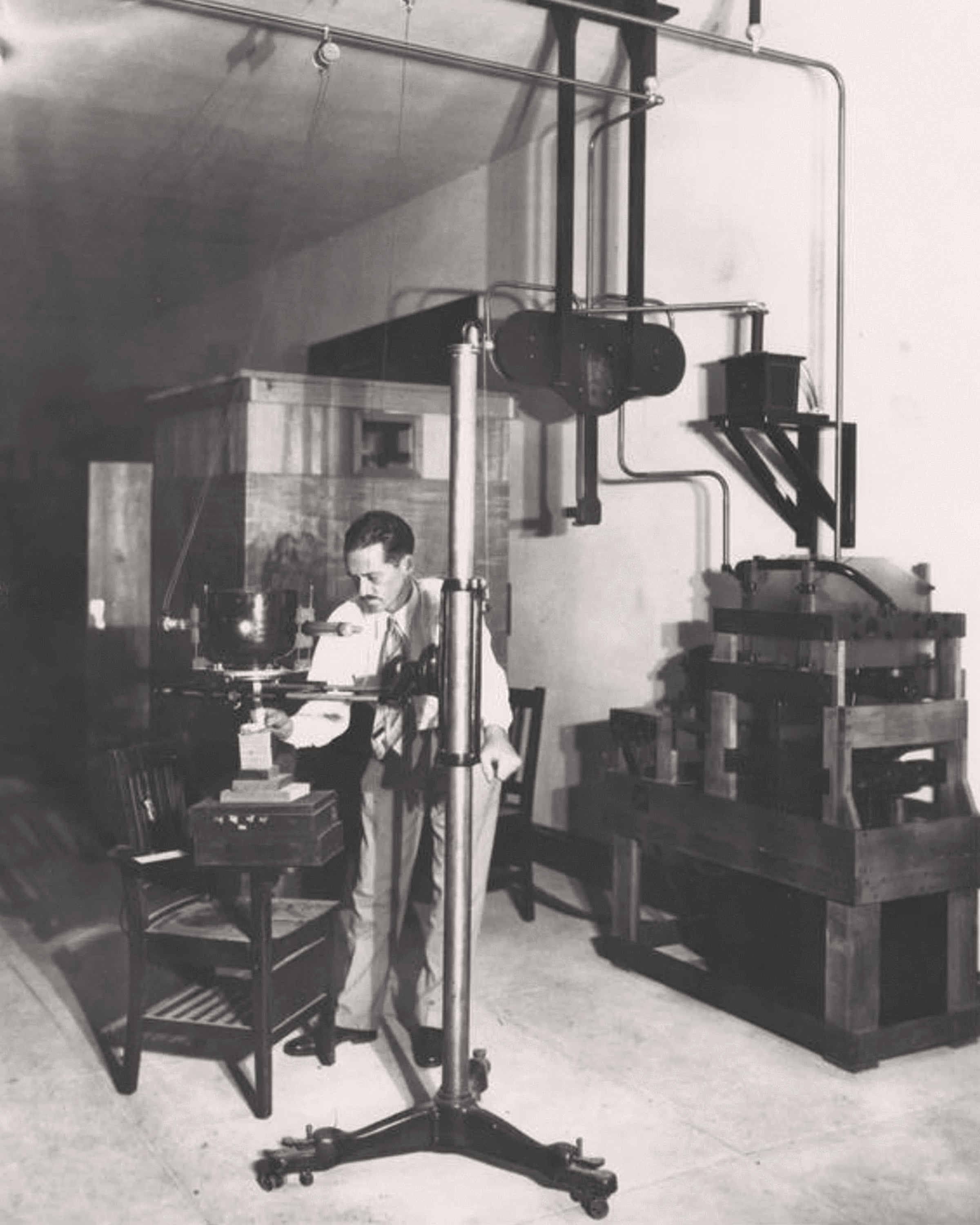
Hermann Muller's graduate student, Clarence Paul "Pete" Oliver, working with an X-ray machine in 1927 that was used in pioneering research that led to Muller’s Nobel Prize. Photo courtesy of Lilly Library, Indiana University, Bloomington, Indiana.
As of June 22, 2026, there were 15 known cases in the U.S. — mostly in cattle but also in goats, a sheep and a pet dog — from a new reintroduction. These developments have prompted widespread community and consumer concerns, including about the potential impact to the cost of beef. Once again, to mitigate the outbreak, state and federal agencies are using the sterile insect technique, alongside surveillance and quarantines established in areas surrounding infestations. The process will take time, but it remains reliably effective, though not fool-proof.
Larry Gilbert, professor of integrative biology, notes that UT researchers continued to work to understand New World screwworms for decades, including potential causes when there was last a significant resurgence of the pest back in the 1970s.“This is one of a number of neotropical species that historically have moved in and out of Texas, depending on favorable conditions. It was driven back to Panama after its resurgence in the 1970s, during my first years here at UT,” Gilbert recalled. “Why the fly has surged north through Central America and Mexico after being eradicated in Texas for 50 years, I suspect, has to do with patterns of transport in the region. But we could also revisit some controversial hypotheses that the earlier UT scientists posed, such as whether female New World screwworms have evolved the ability to recognize lab-reared or sterile males.”
Hermann Muller, working in his UT lab a century ago and experimenting on fruit flies, aimed mostly to understand genetics better and to know more about how basic biology works. He could hardly have predicted the outsized societal benefits that would follow from his curiosity-driven research. Fundamental discoveries with world-changing impact tend to start that way. His work went on to help people understand the dangers of radiation. It led to important advances in crop engineering. And most relevant for our moment, it helped the country address the scourge of the New World screwworm.
Update: A new display in Patterson Hall on the UT campus highlights work by Muller and shows the X-ray machine that was used for his experiments in the 1920s. This post has been updated to acknowledge the new display, as well as work by UT scientists half a century ago.
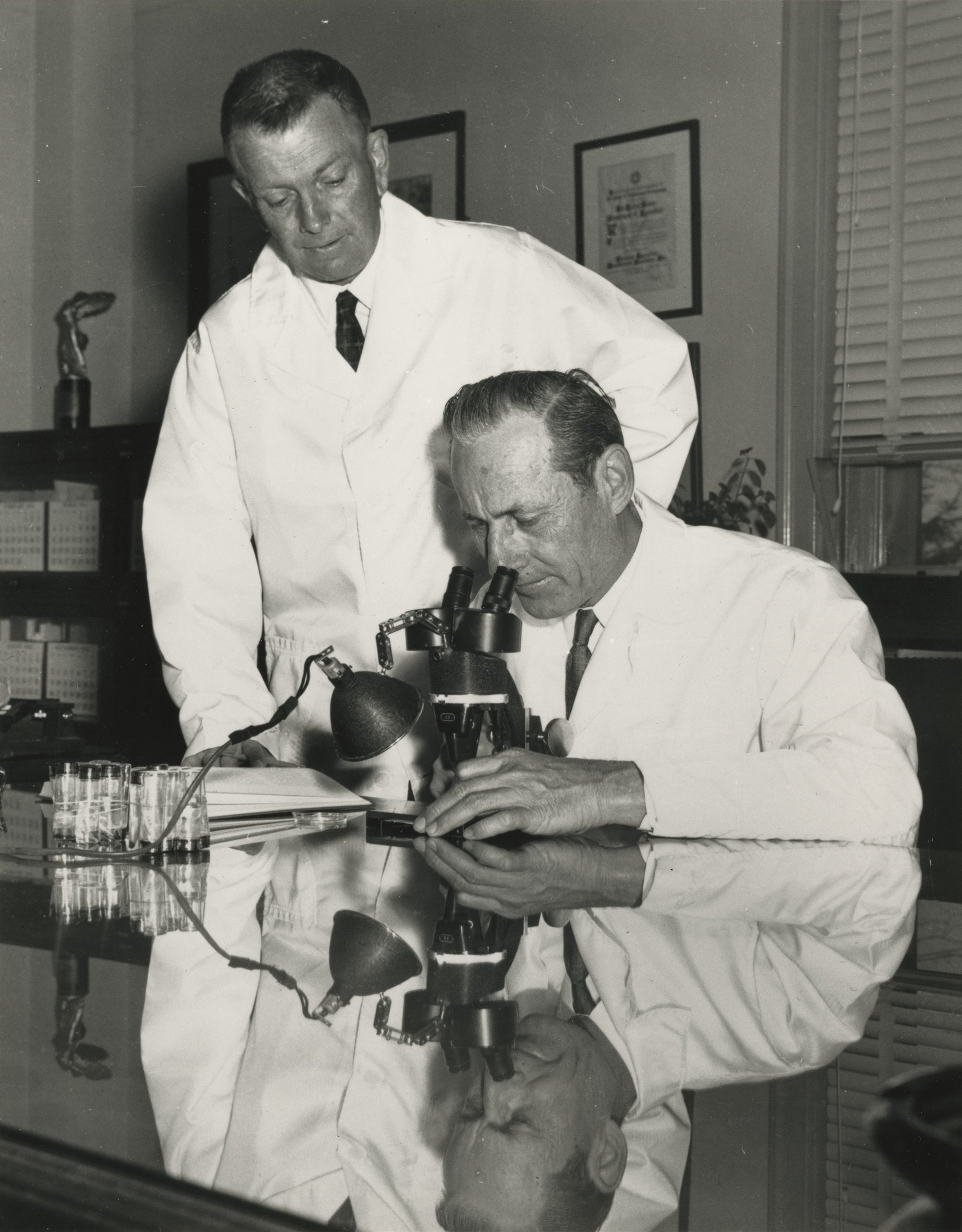
Edward Knipling (seated) and Raymond Bushland in laboratory, circa 1950s. Credit: USDA National Agricultural Library.