Wildflowers Mix it Up to Survive Drought
Researchers at UC Davis, UT and elsewhere use global data on plants and droughts to create framework for planning.
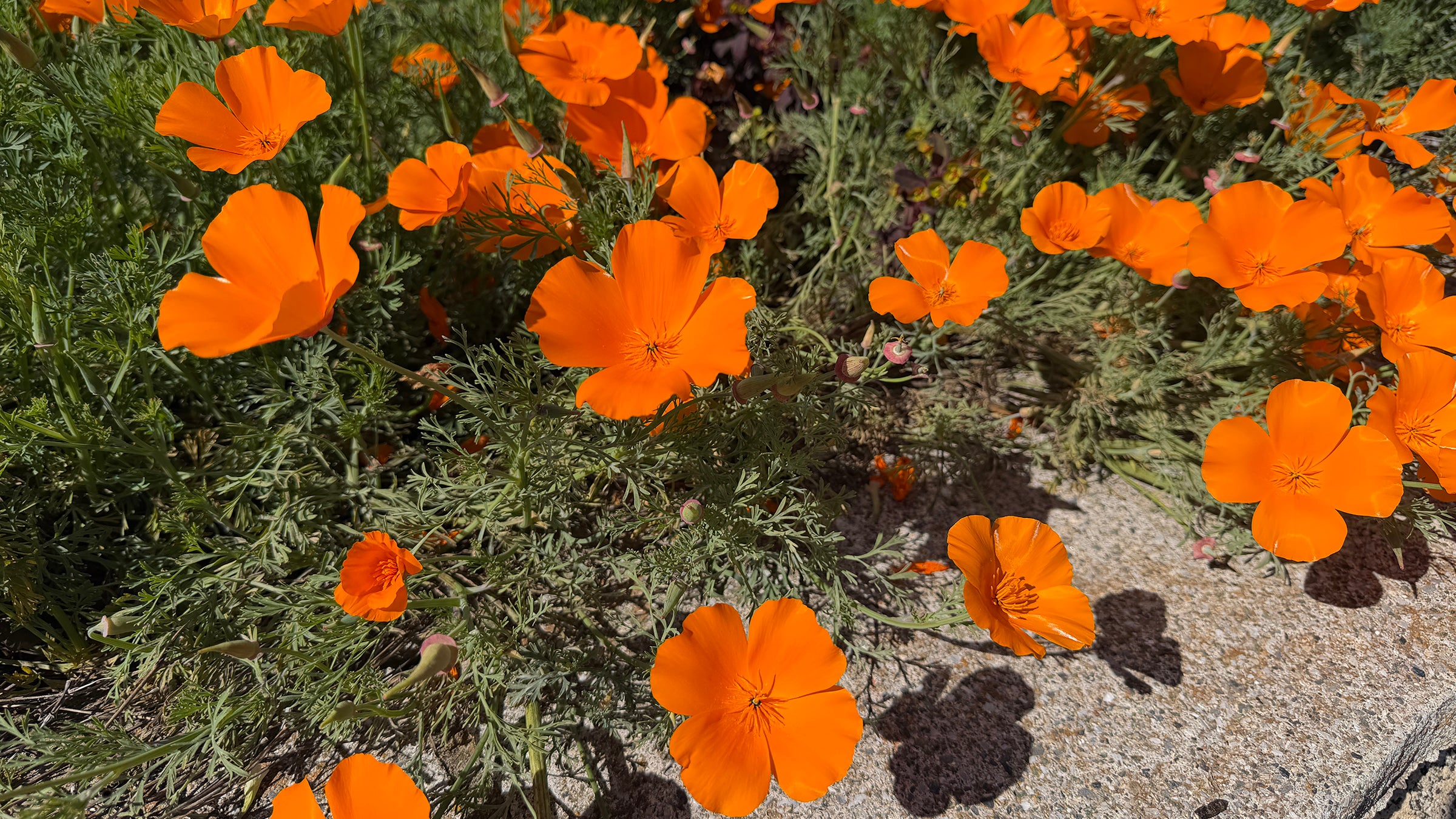
California golden poppies burst into bloom in the Nevada County foothills in early March. Wildflowers use sometimes-divergent strategies to survive drought, according to research from UC Davis and UT Austin. (Trina Kleist/UC Davis)
Across parts of the U.S., colorful wildflowers are blooming, and they have a lot to teach about surviving drought.
A recent study in Nature Ecology & Evolution shows wildflowers employ a mixture of strategies, some intentionally risky and others cautiously conservative, both above-ground and below, to thrive in conditions that can vary widely from year to year. With climate change making drought more frequent and more severe, this work sharpens the ability of land managers to predict which plants will thrive in which ecosystems in the future.
The study, which relied on a global dataset collected with support from the National Science Foundation (NSF), was led by researchers at the University of California, Davis and included Amelia Wolf, an assistant professor of integrative biology at The University of Texas at Austin, and her team.
“This work shows that the plants that fare best aren't relying on a single strategy; the traits that help plants make it through drought depend on the plant and the conditions it's growing in,” Wolf said. “Understanding that variability can help us make better decisions about land management as we move into a more drought-prone future.”
People who manage regional parks, restore former agricultural land and plant for pollinators, for example, “can take this information and decide which species they’re going to plant in a landscape where drought is becoming more common,” said Jennifer Funk, a professor in the UC Davis Department of Plant Sciences.
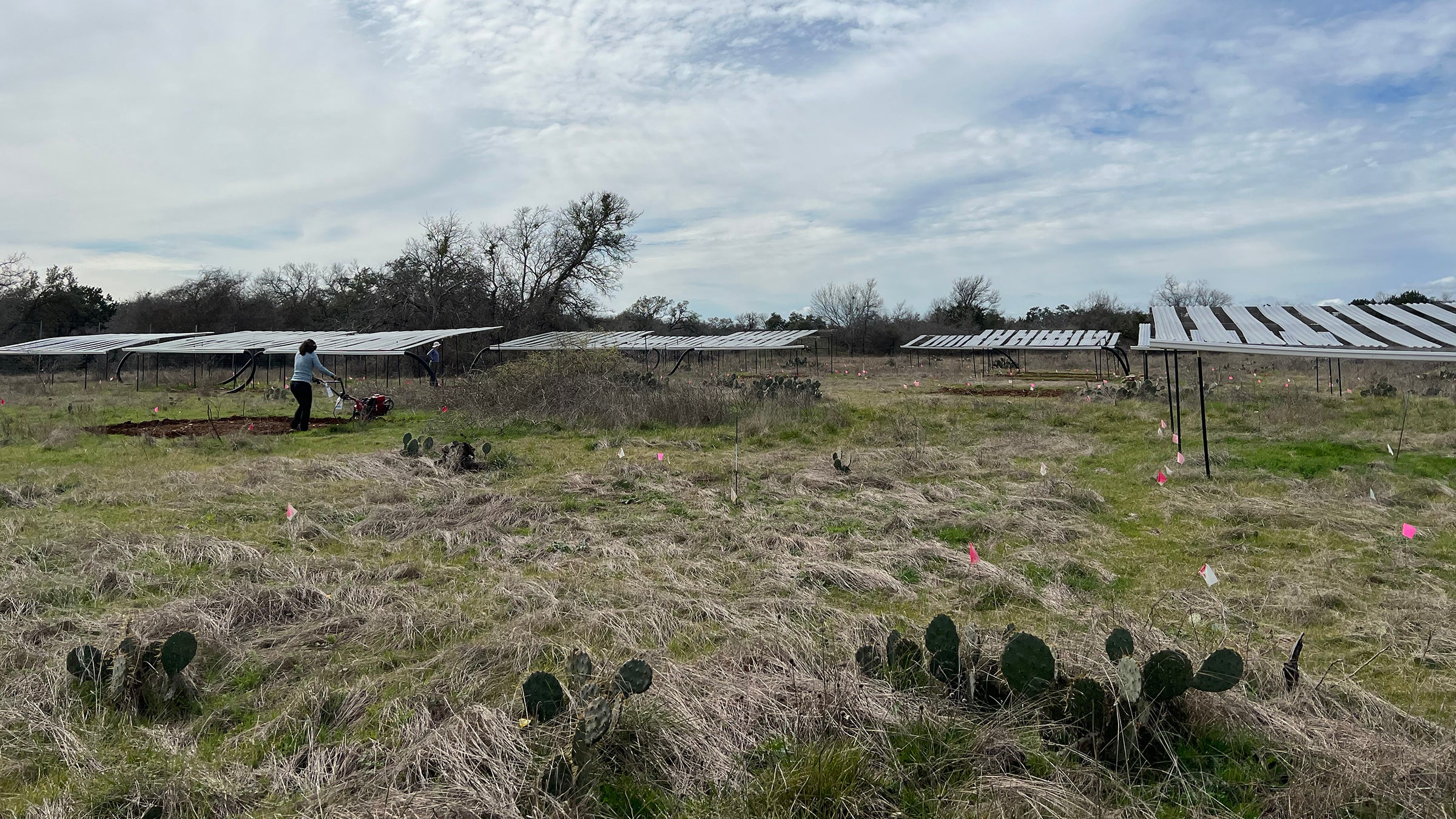
Researchers from The University of Texas at Austin, work in an area of the university’s Lady Bird Johnson Wildflower Center in 2024. These research plots include panels that prevent most rain from falling on the plants below, creating drought conditions. Scientists measure the plants’ responses and upload their data to the International Drought Experiment, a project funded by the U.S. National Science Foundation. (Amelia Wolf/UT Austin)
The team now is creating the new management framework using data that other scientists have collected at more than 60 sites in the United States and around the world – including sites within the Texas Field Station Network – and catalogued in the International Drought Experiment (IDE). As a part of IDE, a research project of the NSF-funded network Drought Net, scientists have recorded precipitation and temperature along with the traits of plants growing at those sites.
The team dug into key plant traits for forbs, which are flowering, broadleaf, non-woody plants like poppies and lupine – looking at height, root structure and nutrients stored in the leaves – in different species and ecosystems. Their result is one of the most comprehensive tools to date for predicting which traits, in which circumstances, will help plants resist extreme, single-year drought.
The team found that drought-resistant forbs used some “fast” traits – such as taller stature and high levels of nitrogen in their leaves, which help plants grow and reproduce quickly before drought wears on. Plants combined those with “slow” traits such as dense roots, which help them hang on when water is scarce. In other words, forbs paired rapid aboveground growth with robust belowground investment.
Mixing risk and caution to greatest advantage
The team found that plant height, leaf nitrogen content, and root characteristics all interacted with environmental conditions to shape drought resistance.
For example, the combination of growing tall and having lots of nitrogen (essential for plant growth) in the leaves support a “drought escape” strategy. Plants with larger roots can recruit fungal “partners” in the soil that help them pull in water and nutrients. Plants with long, thin roots take a different path to drawing in additional resources. However, both tall growth and large roots require significant energy investment, creating trade-offs.
Environmental conditions also shaped how traits mattered. High leaf nitrogen improved drought resistance mainly when drought was mild. Under more severe or prolonged dryness, more conservative traits likely become more important.
And, different species used different trait combinations yet showed similar drought resistance, suggesting multiple pathways to survival, the researchers found.
“There’s no single best drought strategy. What works depends on the environment,” Funk said.
Adapted from a press release from UC Davis.