New Study Could Lead to Safer, More Effective Antibody Therapies
Jessie Zhang, George Georgiou and others are learning how to keep antibody drugs from binding to an unintended receptor.
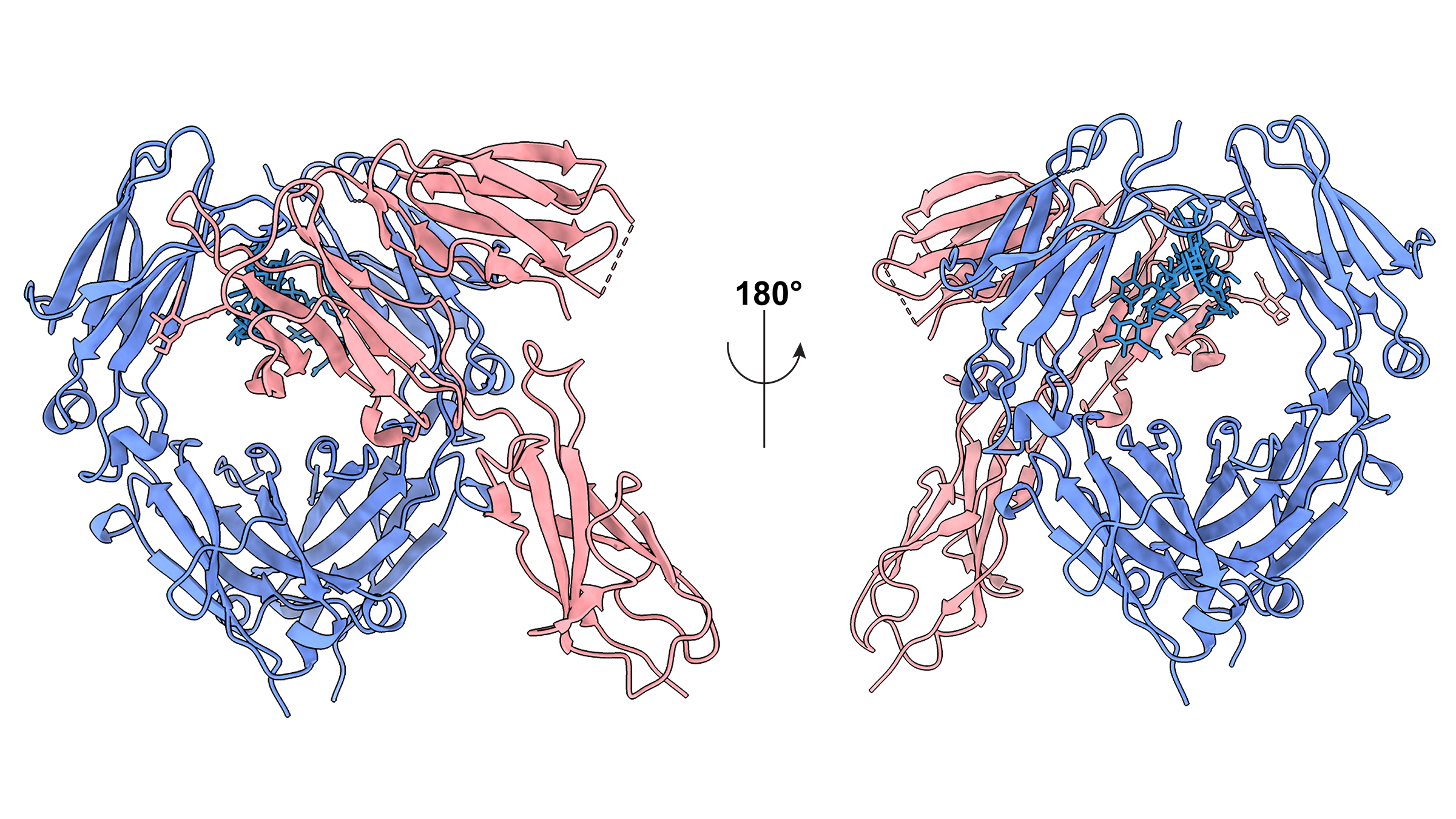
Crystal structure of a receptor on immune B cells called FCRL5 (red) in complex with a region of therapeutic antibodies called Fc (blue). A 180° rotated view illustrates the overall architecture of the complex and the mode of Fc engagement by FCRL5. Credit: Bart Herpers/University of Texas at Austin.
Antibody therapies are one of the most important and fastest-growing classes of modern drugs. They’re used to treat a wide range of disorders including cancer, asthma, autoimmune diseases and certain infections.
But a new study from The University of Texas at Austin published in the journal Science Advances reveals that some of these therapies unintentionally bind to a protein on the surface of immune B cells called human Fc receptor-like 5 (FCRL5), which could cause side effects for patients and reduce the effectiveness of these drugs.
By determining the crystal structure of an antibody bound to FCRL5, the researchers uncovered new insights into how to improve future antibody therapeutics.
The team was led by Jessie Zhang, professor of molecular biosciences, George Georgiou, professor of chemical engineering and molecular biosciences, and Bart Herpers, graduate student in biomedical engineering.
“We found that certain therapeutic antibodies that are carefully designed to prevent unwanted immune reactions still bind to a B cell protein called FCRL5, which was previously overlooked,” explained Herpers. “By detailing how this interaction occurs, we gave drug developers vital insights to better manage this effect. This discovery may result in safer, more effective antibody therapies for all kinds of conditions.”
This work was supported by the National Institutes of Health, the Welch Foundation, Clayton Foundation and the L. Leon Campbell Professorship. X-ray diffraction data was collected at Argonne National Laboratory with support from the U.S. Department of Energy.