Now 50 Years Old, One of the World’s Most Diverse Collection of Organisms Lives On at UT
David Nobles Jr., curator of the UTEX Culture Collection of Algae, looks back and explains why algae matter in research.
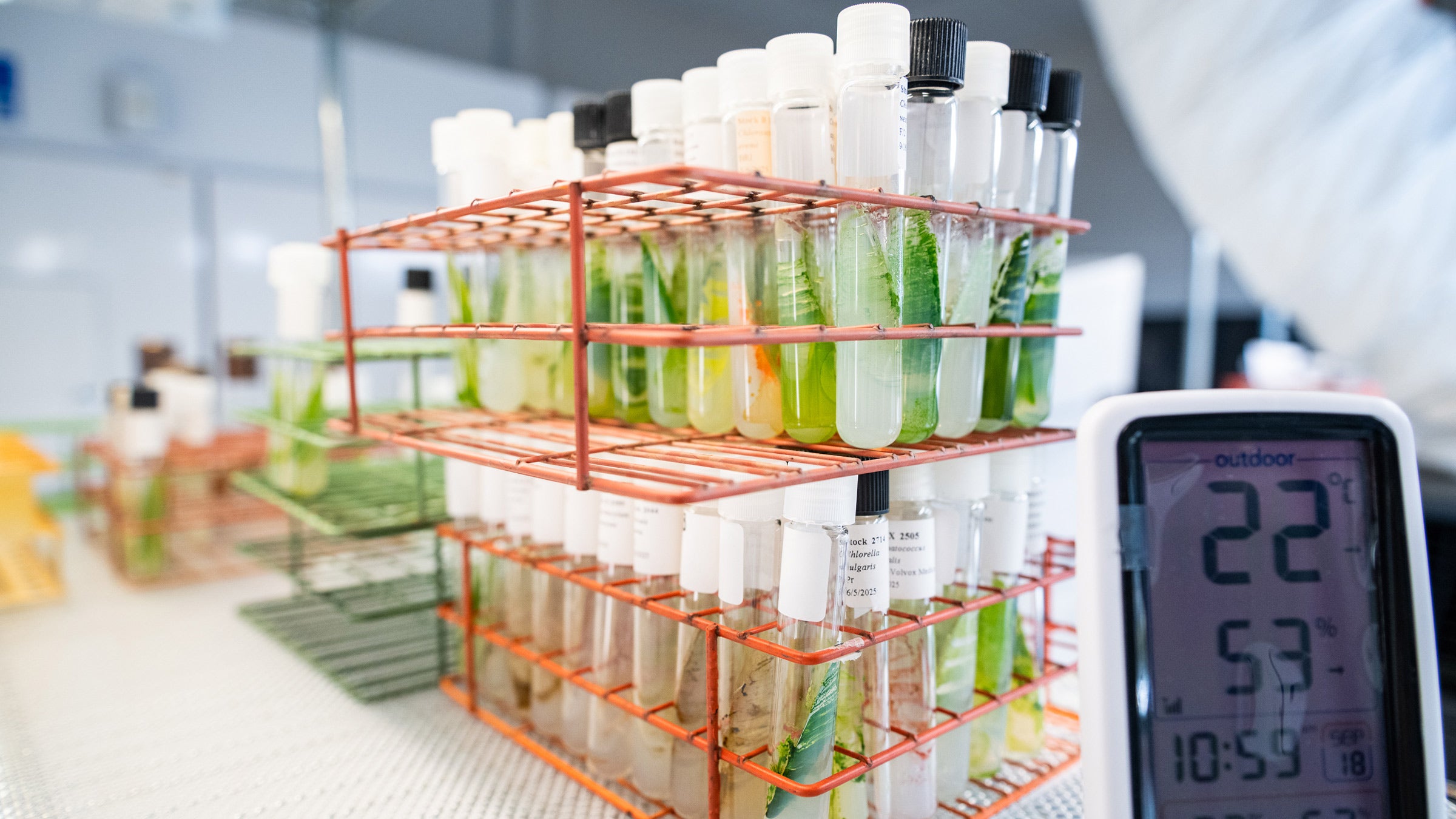
UTEX distributes thousands of algae cultures like these to researchers, educators and companies in every state in the U.S. and dozens of countries around the world every year. Photo credit: Eileen Chong
In 2026, a remarkable collection, unique to The University of Texas in Austin, celebrated its 50th anniversary –– the UTEX Culture Collection of Algae. David Nobles Jr., just the third curator of the collection in its 50 years, is charged with maintaining one of the most diverse collections of organisms anywhere on Earth.
Nobles is a world-class phycologist, the term he and his colleagues prefer for a person who studies algae (the other term, “algologist,” also applies to people who study pain, and Nobles quipped that, though there can be days when that feels fitting, a distinction should be made). This summer, he and his colleagues moved their entire collection, more than 1,500 species, into a new space in the Moffett Molecular Biology Building at UT. We spoke with him to learn about the importance of the collection. This conversation has been edited for space.
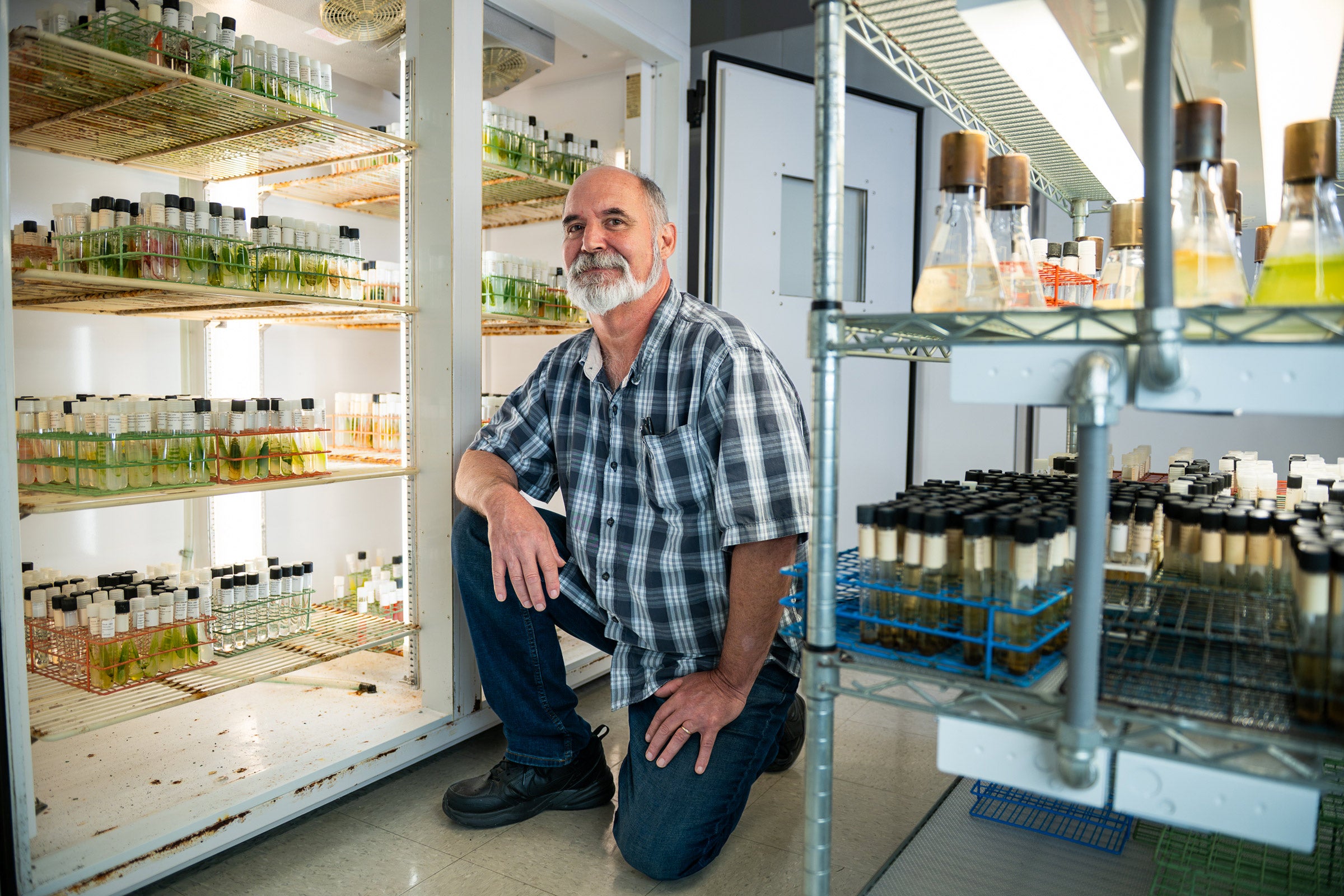
David Nobles crouching amidst hundreds of vials containing algae strains housed in the UTEX Culture Collection of Algae. Photo credit: Eileen Chong
Why is algae so important to catalog and understand, and do you have an example from your own research?
Algae have been found to have tremendous commercial applications, from pharmaceuticals to fuel to mining. For example, phosphate is a limited resource vital to all agriculture, and algae are used to recover it from wastewater. Last year, we got a grant with a group from Sandia National Laboratories in Los Alamos to study algae that bind to rare earth elements. There are few accessible sources of such elements, which is why we call them rare, but these are critical minerals for our modern electronics, computers and phones. Some algae not only bind to these minerals naturally and efficiently, they can be made to collect the precious minerals in wastewater. So, we’ve been studying, including with an incredible group of undergraduates, which algae to use for bio-mining. It’s pretty amazing. Algae may give us an environmentally friendly way to mine rare earth metals.
What’s more, more than half of all carbon dioxide that’s naturally removed from our atmosphere is done so by algae. Algae are vital to our planet’s health. These organisms are also the bottom of the food chain in the oceans. Without them, there would be no marine life. They are often used to feed farm animals, so they are a primary source of protein and nutrients for us, too (plus, pretty much any time you buy a green smoothie to be healthy, one of its main ingredients is spirulina, a kind of algae). Of course, algae also frequently disrupt our lives, such as the frequent cyanobacterial blooms in lakes when no one can swim. For all these reasons, understanding algae better is critical.
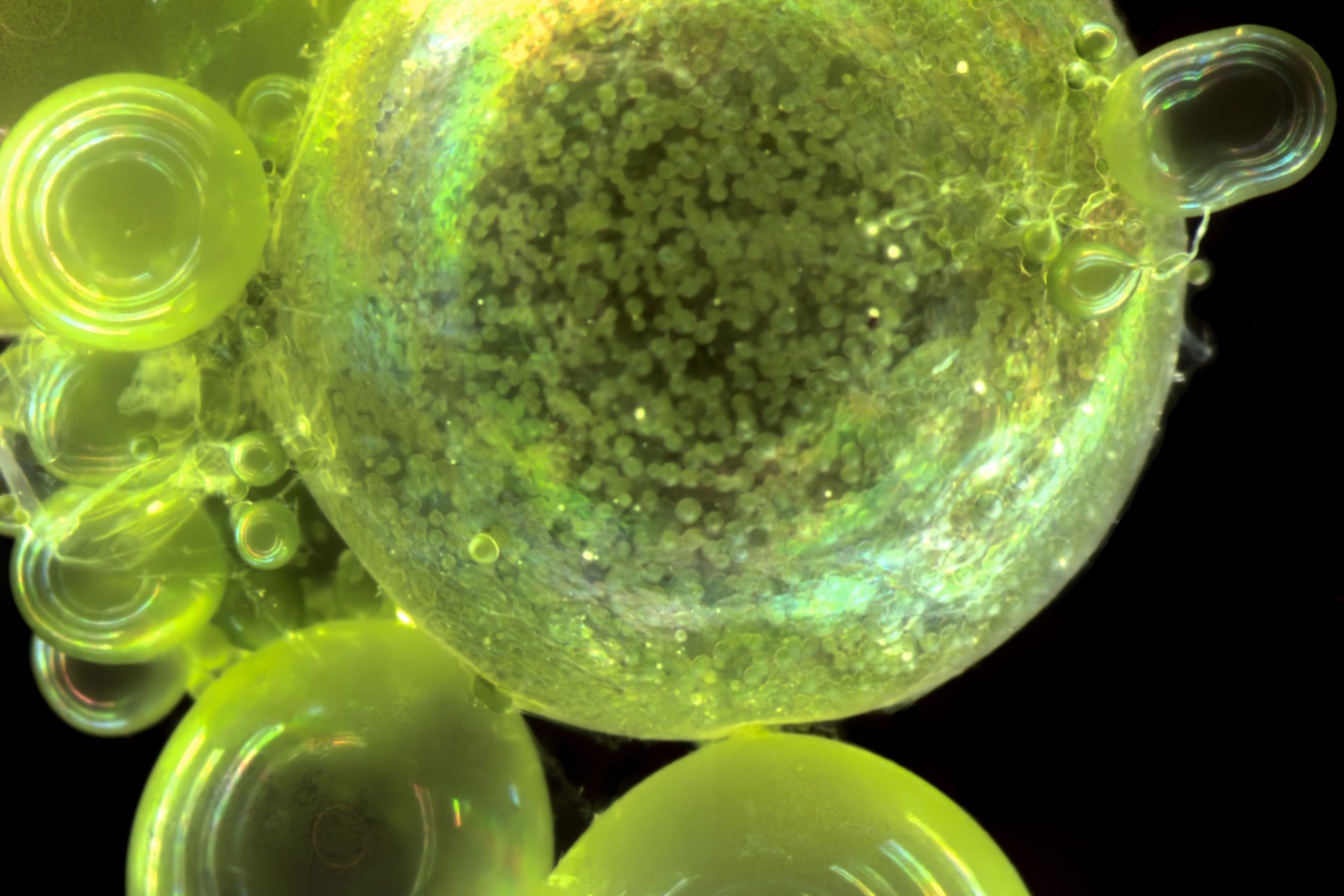
One of Noble’s favorite algae in UTEX is Valonia ventricosa (UTEX 2260), which forms bubbles of air surrounded by protoplasm. The original sample of this specimen was collected in 1970 from Coconut Island in Kaneohe Bay off the island of Oahu, Hawaii, and deposited into the collection in 1975, just a year before the move to UT.
Maybe I should also ask: What is algae?
Well, I like to tell people that algae is plural. That’s a good place to start because there is no singular group of organisms we can call alga.
Have you ever seen the tree of life? There are a few big domains like the eukaryotes, bacteria and archaea. Humans are on a single branch, near the bottom with all the other animals, under the eukaryotes. Plants are in another group of eukaryotes nearby. That means, even the most amazing zoo in the world focuses on organisms from only one group, the animals. The lushest botanical garden anywhere focuses on organisms from only one group, the plants. But what we call algae are not a single natural group. They are on many branches. So, we have 3,000 organisms from across the tree of life that we call algae. That’s why I always say our collection is perhaps the most diverse collection of living organisms in the world.
What we call algae are different organisms that share one characteristic. Most are a single cell, but they all use chlorophyll-a to gather energy from the sun through photosynthesis. And though they are green, they can be distinguished from plants because algae don’t have structures like roots, stems and leaves. Even so, plants stem from one group of algae in the tree of life, so one of my colleagues jokingly refers to plants as “higher and drier algae.” I like that.
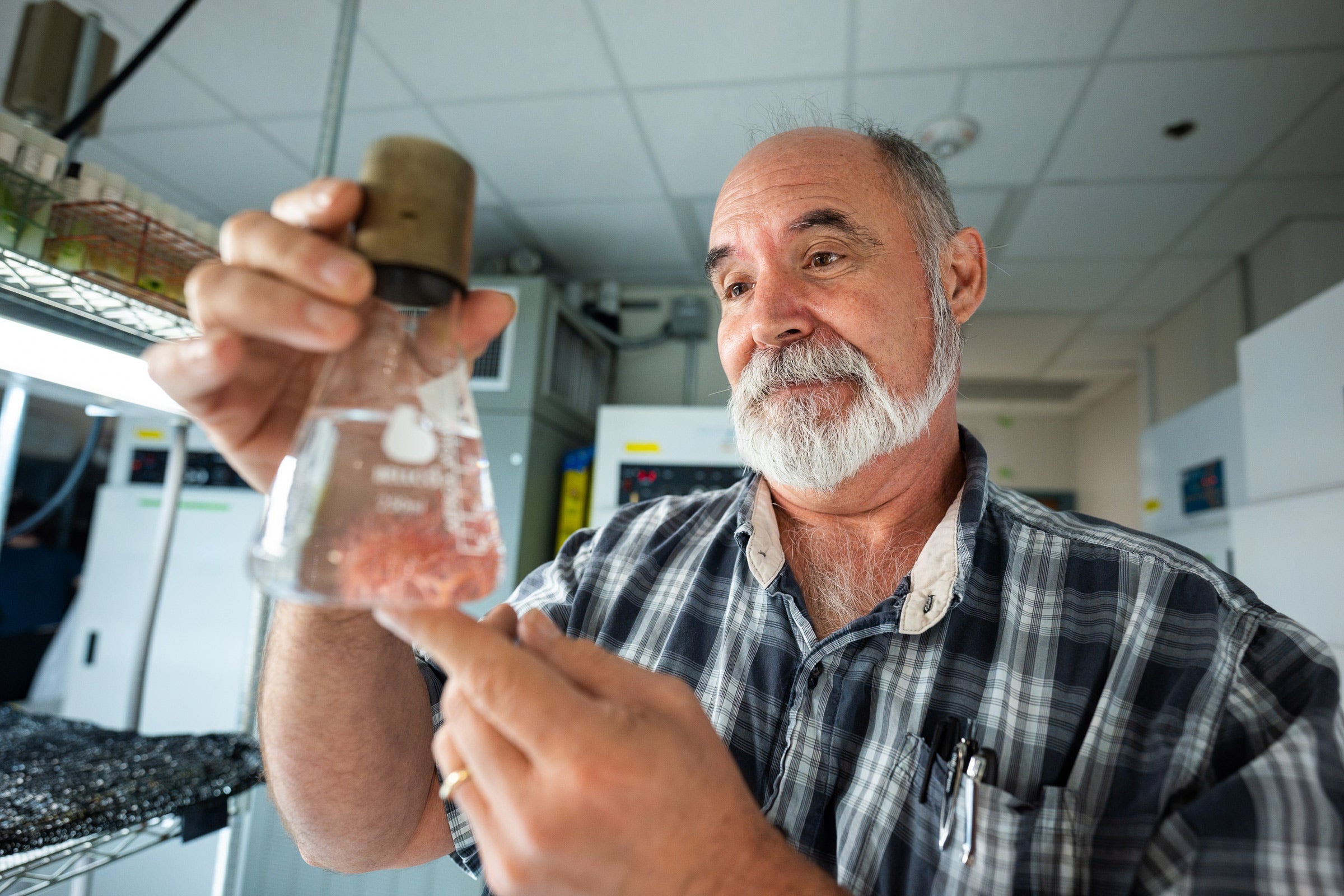
David Nobles holds up an Erlenmeyer flask containing red algae called Gracilaria verrucosa (UTEX 2206). This particular strain is used to make agar, a growth medium used widely in microbiology. The algae in the flask are descended from a sample collected in 1973 from Port Aransas Bay, Texas, and deposited in UTEX in 1979. Photo credit: Eileen Chong
How did the UTEX collection start?
Richard Starr, the founder of our collection, met a man named Ernst Pringsheim in 1953, who gifted him some cultures when they were both at Cambridge University in England. Pringsheim was one of the first people to study and grow algae in the early 1900s, and he escaped from the Nazis with his collection of about 400 strains several years before meeting Starr. Starr brought cultures back to the United States and grew the cultures into a collection, eventually returning to where he had gotten his Ph.D., here at UT. When he returned in 1976, he brought 2,000 strains with him, taking over a space in the Biological Laboratories Building and renamed it the UTEX Culture Collection. He was the director until he passed away unexpectedly in 1998, when Jerry Brand succeeded him. The collection still exists today largely because of Brand’s dedication and skill. We still have some of the original strains from the early 1900s in the collection because of him. Jerry retired in 2015, and I became just the third director. This year, the collection’s 50th anniversary, we finally moved out of our old space and into a new one in the Moffett Molecular Biology Building, a more modern space for the collection.
How did the collection grow to what it is today?
Mostly, the collection grew by accretion. Many researchers have private collections. After they retire, they will bequeath us their most important organisms, to take care of and make available to others. It’s a big responsibility, taking care of someone else’s life’s work. But it’s also a tremendous honor to do this for the community. I’ve just done my best to be a good steward of the collection.
Do you have any famous strains of algae in the collection?
We have the algae used in the original experiments that revealed the Calvin cycle. That’s the process in which carbon is removed from the air by photosynthetic organisms to make sugars, which not only helps the organisms grow but also provides food for all living creatures on Earth. Most people learn about it in school.
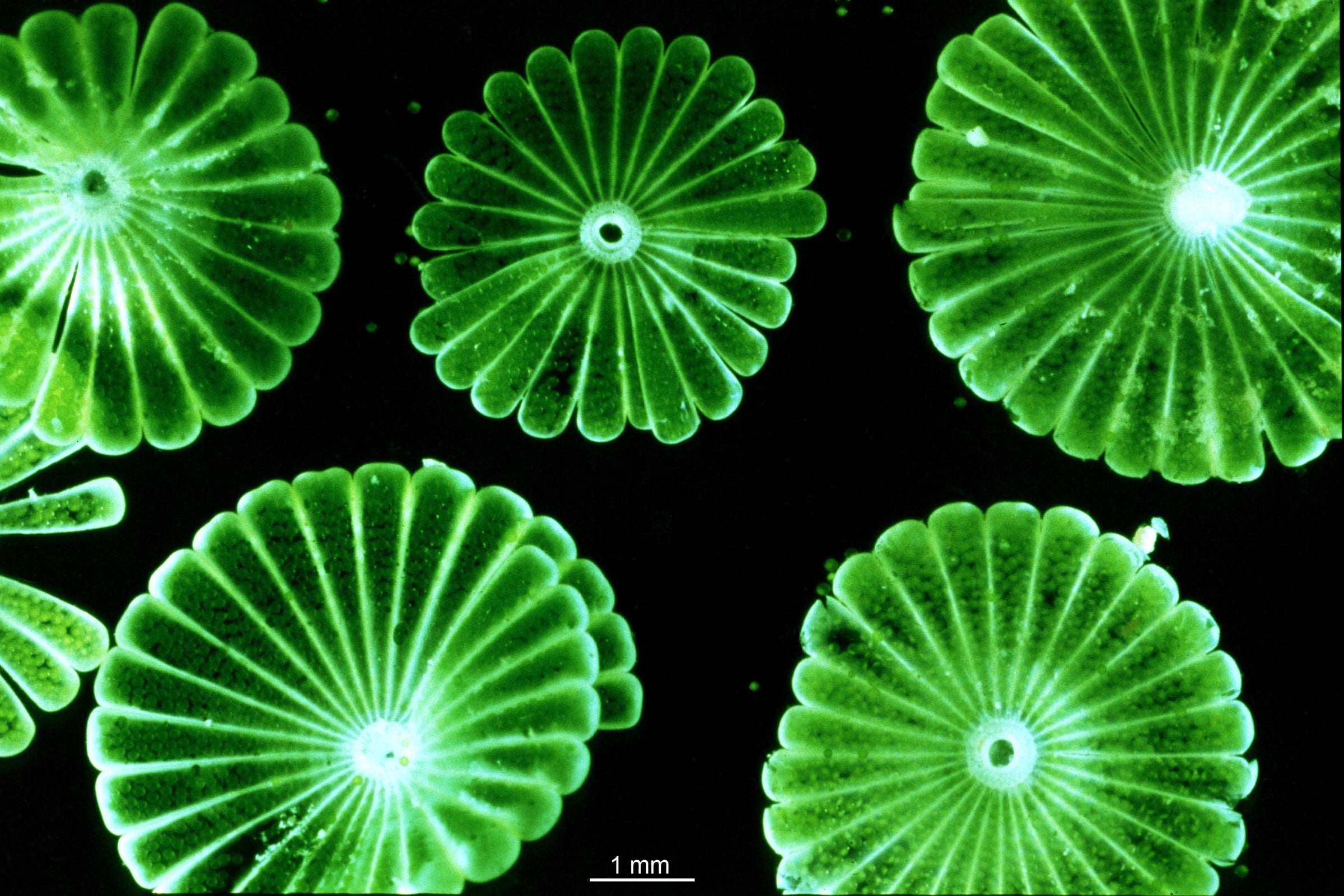
Algae in the genus Acetabularia, another of Noble’s favorites, are sometimes called maiden’s or mermaid’s wineglass because of their shape. These algae are notable for being unicellular, despite reaching lengths of 7-8 centimeters (about 3 inches). This specimen is Acetabularia farlowii (UTEX 2701), which was originally collected from Padre Island, Texas in 1975 and deposited into UTEX in 1976.
What’s a normal day like with the collection?
It’s a very hands-on job, taking care of 3,000 strains of living organisms. Jerry Brand, our former director, grew up on a farm, and he said the work was basically the same: Cows have to be milked every day; algae have to be tended to. That means we don’t get much time off. Most of our work is making food, what we call media, to grow the cultures. Algae can be pretty picky about what they consume. That’s OK because we don’t want them to be too happy and grow too quickly or they’d overwhelm the lab, so we are careful about what we feed them.
We spend much of our remaining time transferring the cultures and making new ones, which is a bit like making sourdough bread from a starter. We have to make sure the cultures don’t get contaminated when we grow new ones from old ones. We’re also a commercial enterprise. We distribute algae to researchers and companies around the world. We fulfill some 3,000 orders to every state in the United States and to some 50 or so countries every year. And more than 1,000 publications a year cite us.
In between, we make time to do research ourselves and train undergraduates. We’ve been lucky that almost half the collection is now frozen and preserved in liquid nitrogen, so we don’t have to care for all the strains we have every day.
Do you have some favorite algae?
So many algae do incredible, weird things. But it is probably Acetabularia, which people call maiden’s wineglass. It looks like a flower. It has a stem and a cup on the end, and it grows to be 7 or 8 centimeters long. But it is still just a single cell. They were very popular for many years in research because you can remove the base where the nucleus is and the cap will live on, because of its incredible messenger RNA. There’s another one I like called Valonia ventricosa, resembling a ping pong ball. They have a very thick cell wall on the outside, but the organism itself is just a thin sphere of protoplasm surrounding an empty space filled with air. When you pop one, all the cytoplasm very quickly makes tiny spheres. After a day or so, all those tiny spheres are new organisms. We show this all the time in demonstrations for the public.