UT Austin’s Continued Commitment to Biological Field Lab Research
The University of Texas at Austin has a long tradition of field station-based research in ecology and biology.
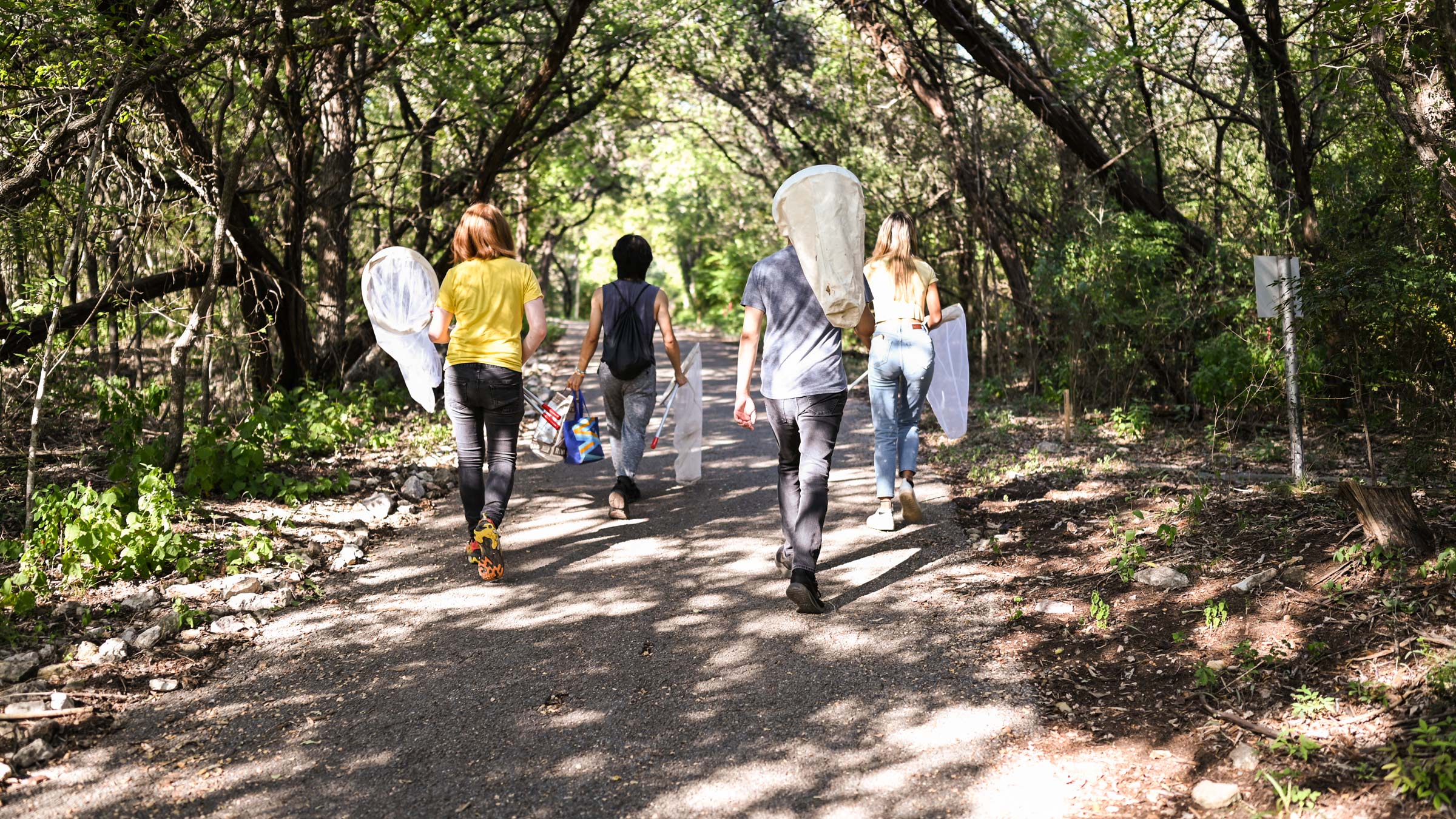
The University of Texas at Austin has a long-standing commitment to study and steward the natural beauty, resources and ecosystems of Texas. Part of that work is done in biological field stations across the state. The University currently operates six field stations statewide and plans to add a new Hill Country Field Station in the coming years. The Texas Field Station Network, which brings researchers, students and community partners into living laboratories across a variety of ecosystems, studies issues critical to Texans, like the effects of drought and extreme weather on our ecosystems, the recovery of native habitats, and the impact of invasive species.
Some of this work has taken place at the Brackenridge Field Laboratory, part of the larger Brackenridge tract, which George W. Brackenridge gave to the University more than a century ago for the benefit of The University of Texas. The first site, the Brackenridge Field Laboratory was created in 1963 to serve as a biological science experimental field laboratory for 20 years as part of a grant from the National Science Foundation.
“The size and scale of individual biological field stations changes over time, while the overall commitment to the work at UT diversifies and grows. UT has expanded its research strategies to focus on leveraging the full network of field stations and relying less on the existing Brackenridge site,” said David Vanden Bout, dean of the College of Natural Sciences. “This approach supports broad interdisciplinary research and hands-on learning that brings faculty and students from across campus to a variety of field stations throughout Texas.”
The University is working with the City of Austin to amend the Brackenridge Development Agreement (BDA), which sets an overall framework for how the land under the BDA can be used. The proposed amendment to the BDA does not determine the scope and use of the Brackenridge Field Laboratory. Under both the current and potentially amended BDA, the University determines the scope of use for the field station as part of its overall research mission.
While UT has not made specific plans for future development of the Brackenridge tract, the University intends to retain portions of the tract to preserve areas for biodiversity research and education. Any future changes to the Brackenridge Field Laboratory will be evaluated in consultation with the leadership of the College of Natural Sciences, who will seek input from the faculty-led Biodiversity Executive Committee, and determined by the University based on the overall best interest of the University mission.