Building Better Tech for Marine Science: A Q&A with Chip Breier
Chip Breier (Ph,.D. '06) is a marine biogeochemist and engineer at Woods Hole Oceanographic Institution.
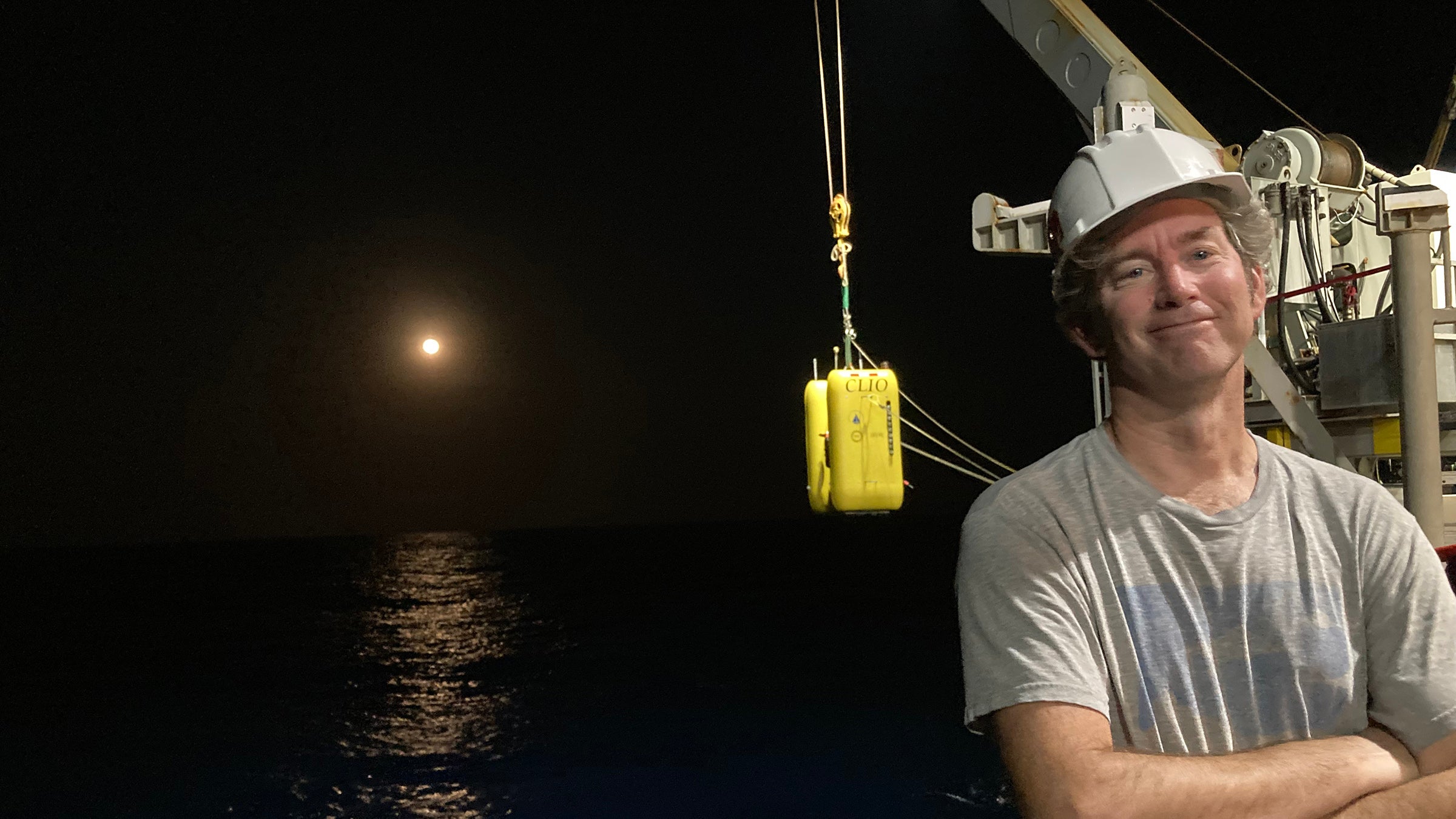
Chip Breier (Ph,.D. '06) is a marine biogeochemist and engineer at Woods Hole Oceanographic Institution. We interviewed him recently about how his background in engineering informs the way he approaches marine science. The interview has been edited for length and clarity.
What kinds of things do you work on as a marine biogeochemist and engineer?
I want to help solve environmental problems that impact our supply of clean water and the healthy ecosystems that we enjoy. So I go to aquatic environments where different fluids mix—for example, where a river empties into a bay, or where heat and chemicals erupt from a hydrothermal vent on the seafloor, or where agricultural runoff interacts with a coral reef—and study how those inputs impact the microorganisms in the water. They’re often missing various nutrients like nitrogen, phosphorous, iron or methane. So these fluxes come in and the microbes sometimes respond in a big way, which can transform the environment and the food chain.
What tools do you use?
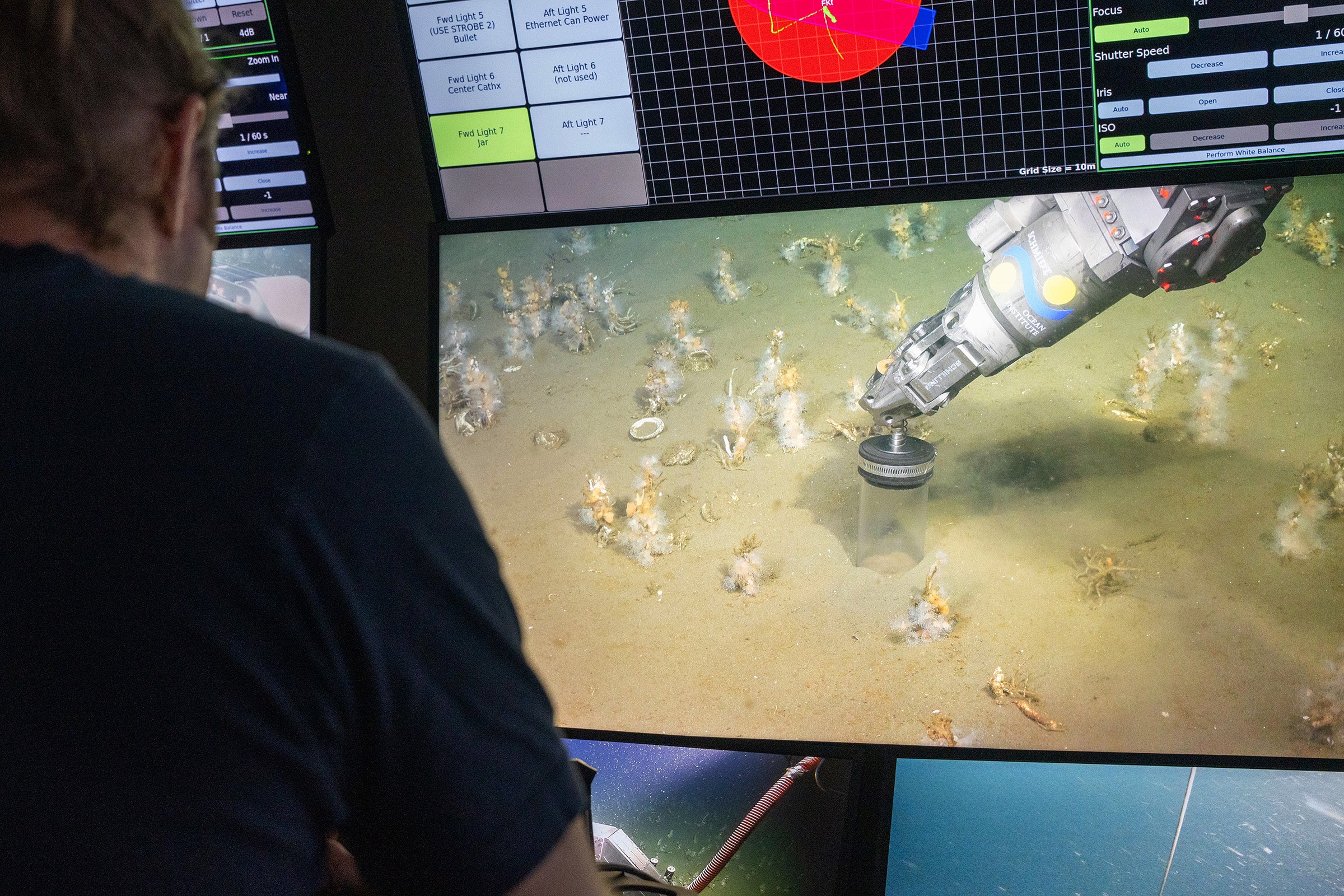
At first, I was developing individual tools for existing submarine robots to take real-time measurements and collect samples. But then about 10 years ago, I was the lead designer of a robotic submarine called CLIO that can sense when it’s in a place of interest and then collect water, minerals and microbial cells automatically without a human operator. And it does this at a range of depths so we can compare how similar microbes behave differently when they’re in different environments. Back in the lab, my collaborators and I can measure some of the water chemistry in the samples that’s not currently possible onboard the robot, as well as the genomics and proteomics of the microbes.
What do you like most about being both a scientist and an engineer?
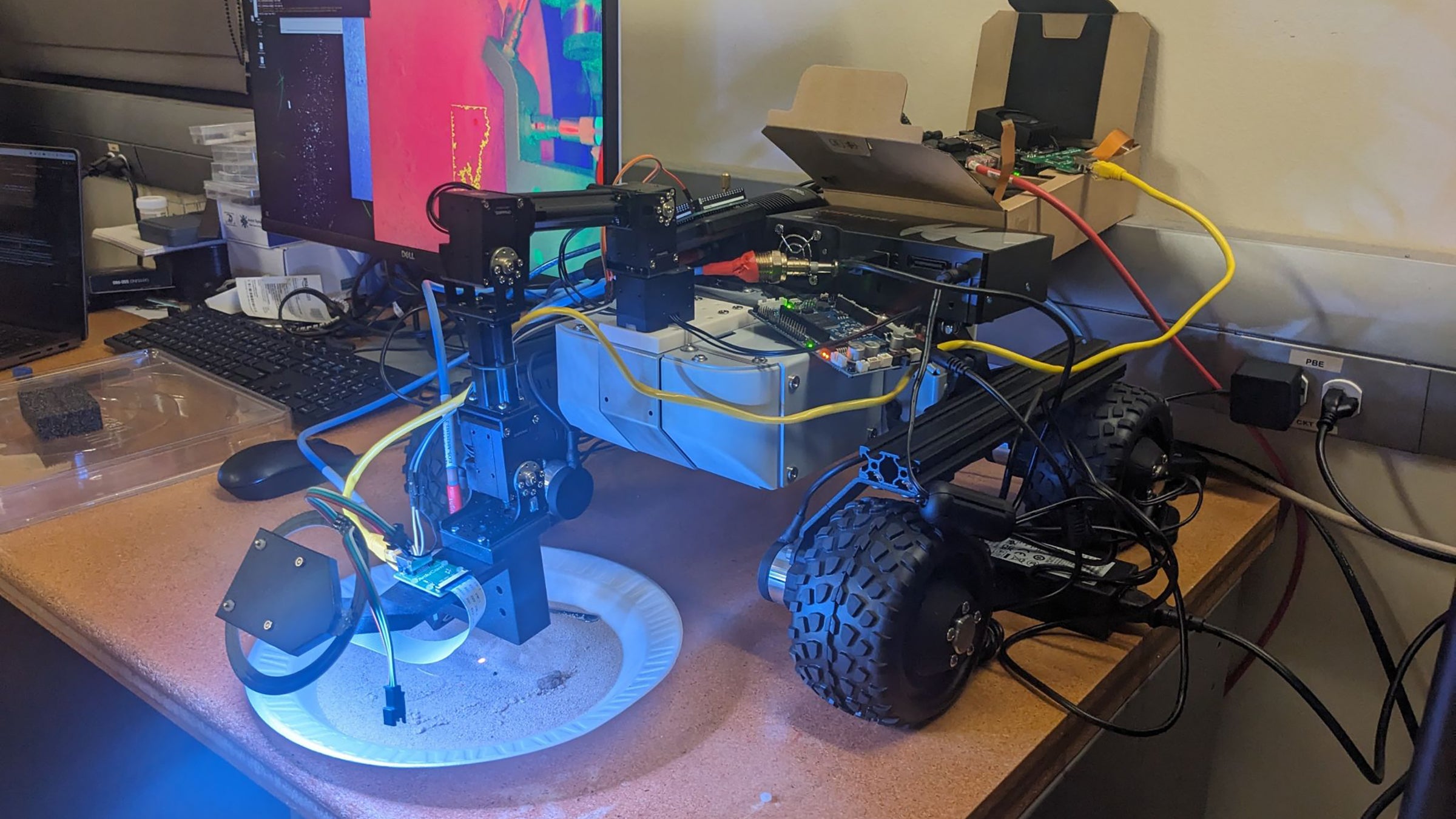
The best part is that I can work on a question that I know is scientifically valuable but the ability to get observations is just not quite there technologically. And then, if I’m able to push that technology just past the point where we can make those observations, that’s very satisfying. Ocean science has been held back technologically because there’s just not as much commercial equipment you can buy off the shelf and put under water. There are things we would love to use that are available on land, but the market’s just not big enough for an underwater version.
What’s most challenging about your work?
On long research cruises, you have to manage risk. Once you leave shore, you can’t turn around because something you took doesn’t work. To overcome that, you have to do a lot of testing before you step on the boat. It’s like a stock car race—the race starts and it doesn’t stop until it’s over. Like stock cars, our pieces of equipment are pushed to their limits and things will start breaking. We’re like the pit crew—every time the equipment comes out of the water, we’re testing things, checking fluids, replacing parts. And you never want to reach into your box for something and it’s not there. That happened occasionally in my early career and the only way around that is to be more attentive before the cruise to make sure you have everything. You’ve got a big NSF grant and three weeks on the ship and if you blow it, you’re not getting it back.
How has your work with CLIO, the robotic sub evolved?
CLIO became operational in 2017, and at first, it took six of us engineers to operate it. We went on multiple cruises and we kept tinkering with it. And over time, it’s gotten more operational and able to answer more science questions with fewer and fewer of us. During our cruise last spring, it was just me and Mike, who is the other key expert on the vehicle systems. And now we’re confident that people who weren’t the designers can have a good experience with it. It’s at the point where we can transition it so that more people can use it, and they soon won’t need Mike and me. I realized that this robot is like a teenager. I put in more time than I’d care to admit, but now it’s grown up and will go have a life without me, which is bittersweet, but it’s what I wanted.
You started out working as an engineer in the U.S. Navy and then ended up becoming a marine scientist. How did that transition happen?
After I got out of the Navy, I came to UTMSI because I had started to get the idea that I wanted to solve environmental problems. Growing up, we’d spend the summers on the Guadalupe River near New Braunfels and I just really wanted to understand what makes a river or a bay healthy. But being an engineer, I wasn’t sure I wanted to focus on basic research, so I only agreed to do a master’s.
I was coming from an engineering mindset where we find problems and come up with solutions. And then I began to appreciate that basic science involves solving problems. Some are longer timeframe, but some are immediate, like how do we collect our data? It didn’t bother the professors at UTMSI that I was an engineer. The whole field of ocean science has a desire to move forward with observing technology. They saw the value of part of our community getting involved in doing that. At first, I had to focus entirely on the science and the chemistry and put aside engineering. But they made it clear that there would be a point where those things would come together and that did happen. And I decided I’d stick around for a Ph.D.
What did you enjoy most about your time at UT’s Marine Science Institute?
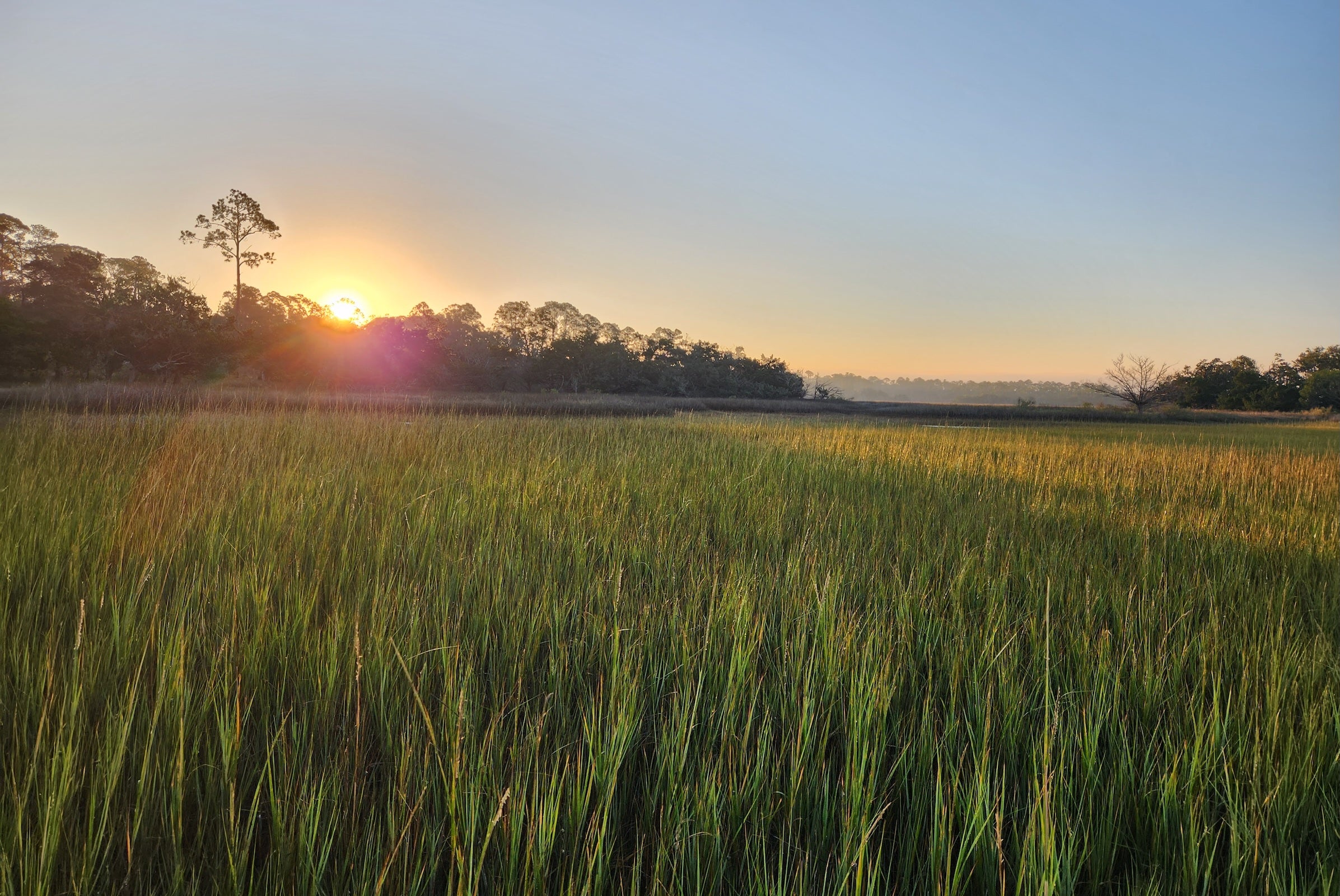
Port Aransas is basically a small fishing village. And if you’re doing a Ph.D., you’re there five or six years. You certainly know all the students because you’re living in really close proximity. But also, we walked or biked everywhere, and eventually you get to know most people in the town. It’s a really tightknit community and that was pretty great. And then, for my field work, I went all over the region collecting water samples in the bays and in groundwater wells at various ranches. It was a pretty idyllic time in my life. I kept thinking, “Is this work?”
What did you value the most about your time as a UT graduate student?
UT’s Marine Science Institute trained me to go out and safely and effectively do field work by planning ahead, knowing what we’re going to do, being ready for things to go wrong—all skills I continue to use—to get the job of the science done. In grad school, I was responsible for everything—designing experiments, collecting my own data and analyzing it. It’s how I teach my students. It builds their confidence and makes them capable. It also helps with understanding. If you don’t take measurements yourself, you can’t look at the results critically. UTMSI enabled that and as a result, I’m more well-rounded as a scientist.