Kurtis Carsch Selected as a 2026 Packard Fellow
The fellowship will fund research on materials with applications in energy, medicine and drug discovery.
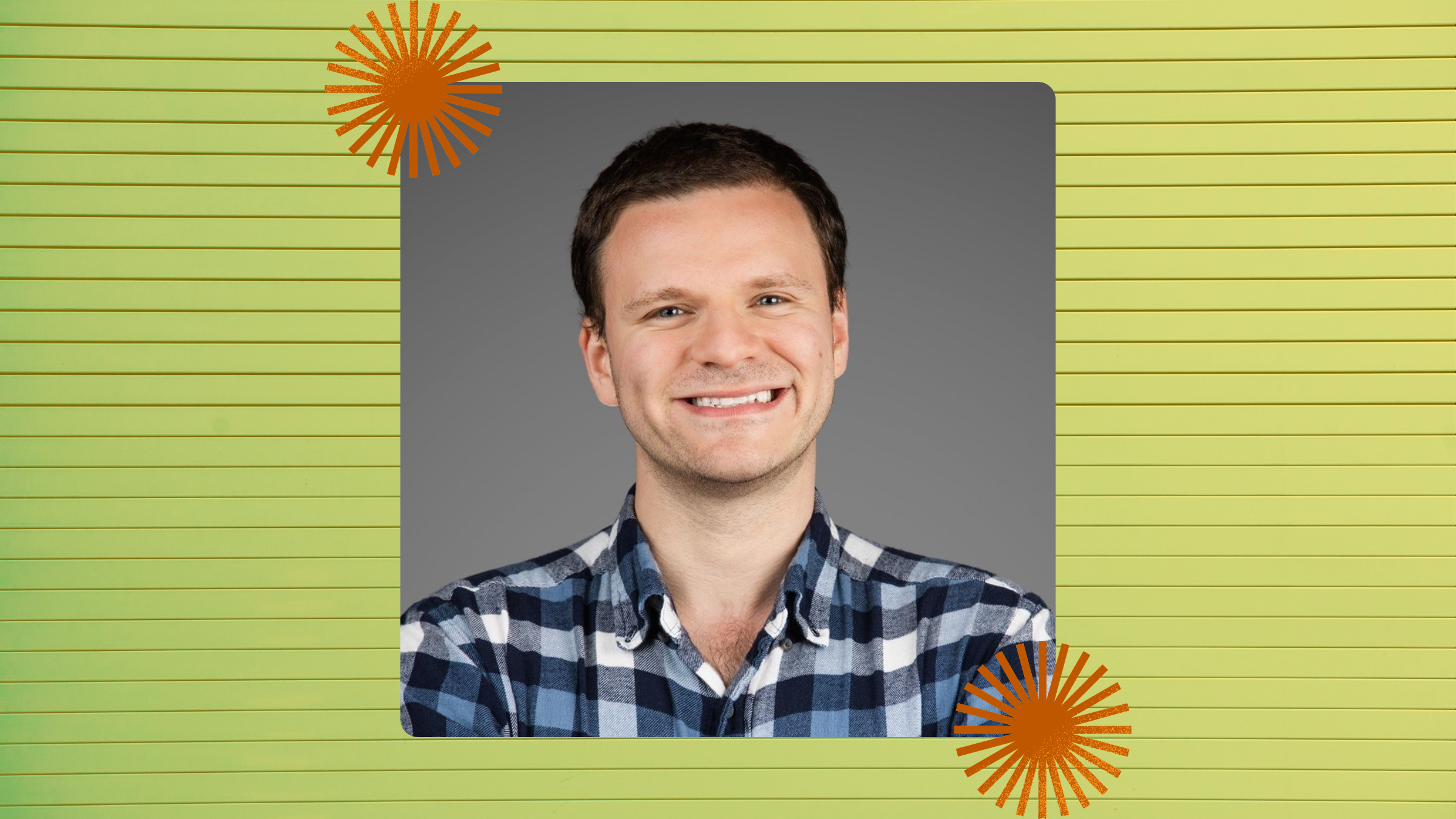
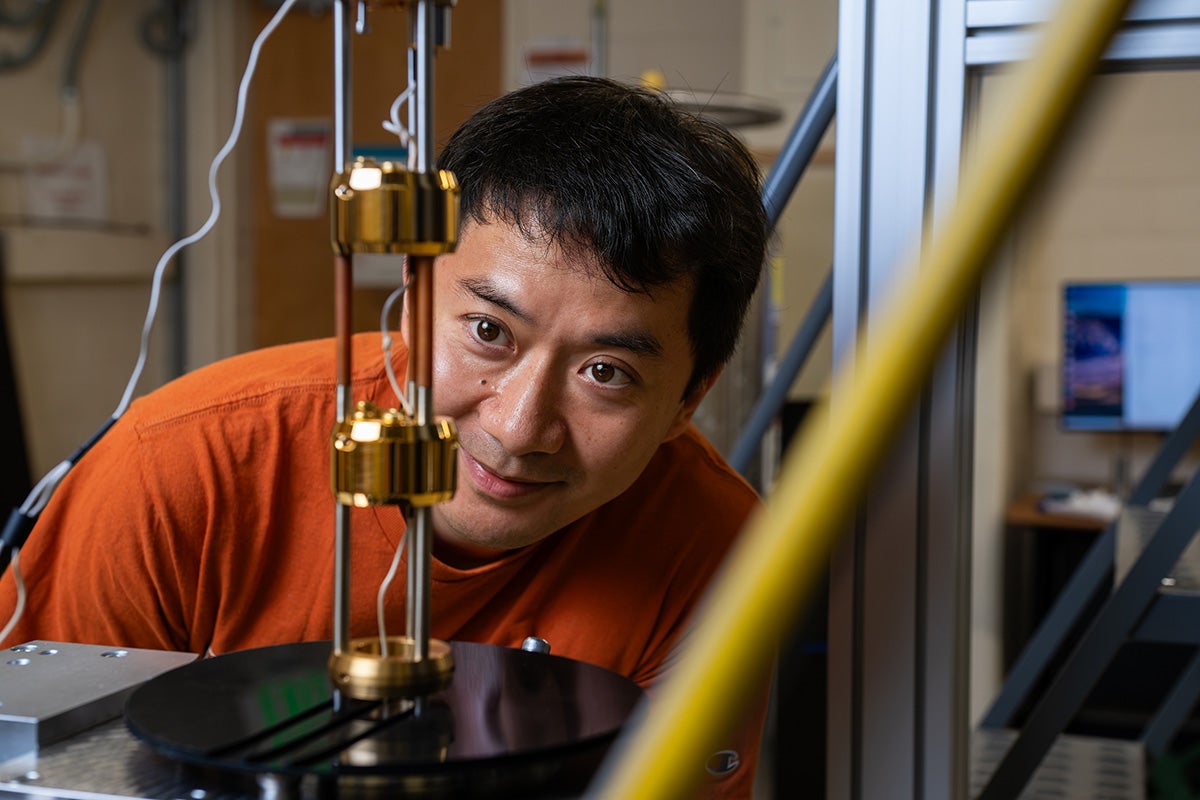
Kurtis Carsch, an assistant professor of chemistry at The University of Texas at Austin, has been selected as a 2026 Packard Fellow for Science and Engineering by the David and Lucile Packard Foundation. The fellowships provide 20 of the nation’s most promising early-career scientists and engineers with flexible funding and the freedom to take risks and explore new frontiers in their fields of study.
“The funding from the Packard Foundation will allow my group to pursue ambitious research that enables materials with permanent voids to be practically used,” Carsch said. “But more broadly, the support will allow us to explore offshoot projects that may turn out to be promising, and that we needed the independence and flexibility to follow through.”
Carsch’s group designs new molecules and materials to address fundamental challenges in chemical separations and synthesis. Specifically, they build porous materials that separate and store isotopically distinct molecules for use in nuclear energy and medicine; engineer porous solids that can be processed as liquids and polymeric membranes for use in energy applications; and design reactive molecules with unusual properties that enable unconventional chemical transformations for drug discovery.
Since 1988, the Packard Fellowships for Science and Engineering have supported transformative work by providing unrestricted funds, giving Fellows the freedom to follow the science wherever it leads. Fellows decide what their research needs, whether that is new equipment, another researcher on the team, travel to a conference, or childcare during the demanding early years of running a lab. That flexibility lets fellows test novel ideas, follow unexpected findings, and lead research that drives real-world impact.
This year’s class features 20 early-career scientists, mathematicians, and engineers, who will each receive $985,834 in unrestricted funds over five years to pursue their research.
“These scientists, engineers, and mathematicians are asking ambitious questions about our bodies, our planet, and the technologies shaping our future,” said Nancy Lindborg, President and CEO of the Packard Foundation. “At a time of significant uncertainty in the research landscape, flexible, long-term support for early-career researchers matters more than ever.”
The Fellowships were inspired by David Packard’s passion for science and engineering and his commitment to strengthening university-based research in the United States. Recognizing that the success of the Hewlett-Packard Company, which he co-founded, grew from breakthroughs in university labs, the Foundation launched the program 38 years ago. Since then, the Packard Foundation has awarded more than $550 million to support 755 scientists and engineers from 55 universities.
“What is exciting about supporting researchers at this early stage of their career is that some of their most important discoveries are impossible to anticipate,” said Richard Alley, chair of the Packard Fellowships for Science and Engineering Advisory Panel. “This year’s Fellows combine deep expertise with the curiosity and ambition to take their fields into entirely new directions.”
Carsch joins three other recent Packard Fellows selected from UT Austin: chemical engineer Brian Belardi (2023), chemist Devleena Samanta (2024) and mathematician Maggie Miller (2025).
Over nearly four decades, Packard Fellows have advanced scientific understanding across disciplines, from fundamental discoveries about the natural world to advances in medicine and technologies that have become part of daily life. Fellows have gone on to receive many of the field’s highest honors, including Nobel Prizes in Chemistry and Physics, Fields Medals, Alan T. Waterman Awards, Breakthrough Prizes, Kavli Prizes, and elections to the National Academies of Science, Engineering, and Medicine.
Each year, the Foundation invites 50 universities to nominate two faculty members for consideration. The Packard Fellowships Advisory Panel, a group of 12 internationally recognized scientists and engineers, evaluates the nominations and recommends Fellows for approval by the Packard Foundation Board of Trustees.
Carsch has been recognized with several accolades throughout his career, including the 2026 Beckman Young Investigator Fellowship, the 2022 CAS Future Leaders program, the 2021 Beckman Postdoctoral Fellowship, the 2016 Hertz Fellowship and the 2016 NSF GRFP Fellowship.