Under Antibiotic Siege, Frontline Bacterial Cells Protect Their Colony from Beyond the Grave
Rasika Harshey’s lab studies how dying bacteria can increase antibiotic resistance among their neighbors.
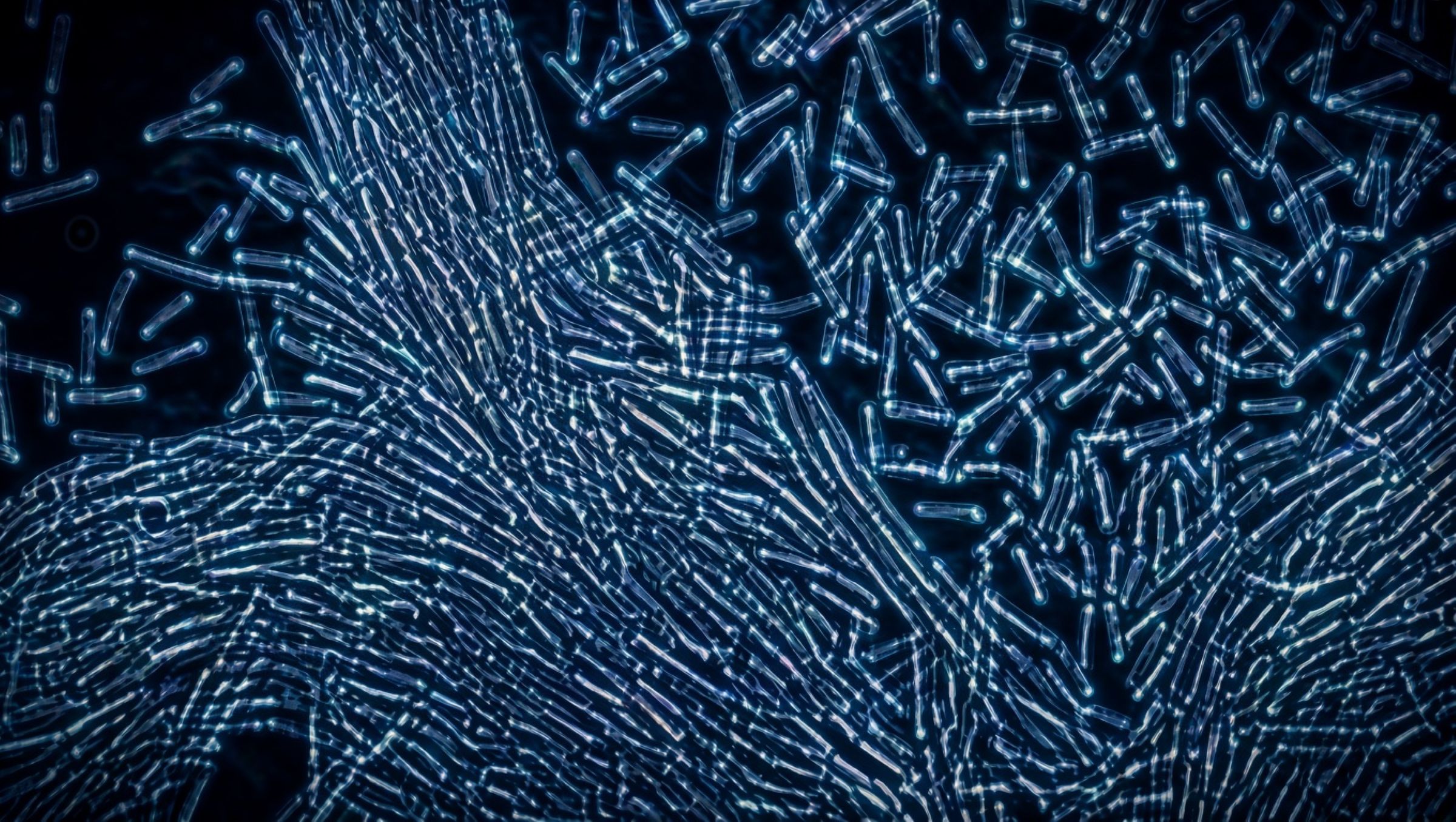
When a swarm of bacteria, such as Bacillus subtilis, encounters positively charged antibiotics, dying individuals release RNA that can help protect their neighbors. Image credit: Rasika Harshey/Vineet Kumar/University of Texas at Austin.
Antibiotic resistance is usually attributed to genetics: a subset of bacteria during an infection survives the treatment and passes on its genes to create a more resistant infection. However, a new study by a University of Texas at Austin research team led by Rasika Harshey, a professor of molecular biosciences, and Vineet Kumar, a postdoctoral researcher, describes a form of temporary, community-level antibiotic tolerance. It would seem that, much like people, bacteria are stronger in community.
“We think that antibiotic resistance is one of the emergent properties of a bacterial community under antibiotic stress,” explained Harshey, who is a member of the LaMontagne Center for Infectious Disease.
Antimicrobial resistance was associated with nearly 5 million deaths worldwide in 2021 and is predicted to double by the year 2050.
The research team noticed that bacterial swarms showed more resistance to the common antibiotic kanamycin compared to independent, individual cells. Their new research, published in the journal Communications Biology and supported by the National Institutes of Health, found that RNA released from dead cells can act as a ‘molecular sponge’ to prevent certain antibiotics from reaching live bacteria.
“The effectiveness of an antibiotic may depend not only on the drug and the bacterium, but also on the extracellular environment surrounding the cell,” said Harshey.
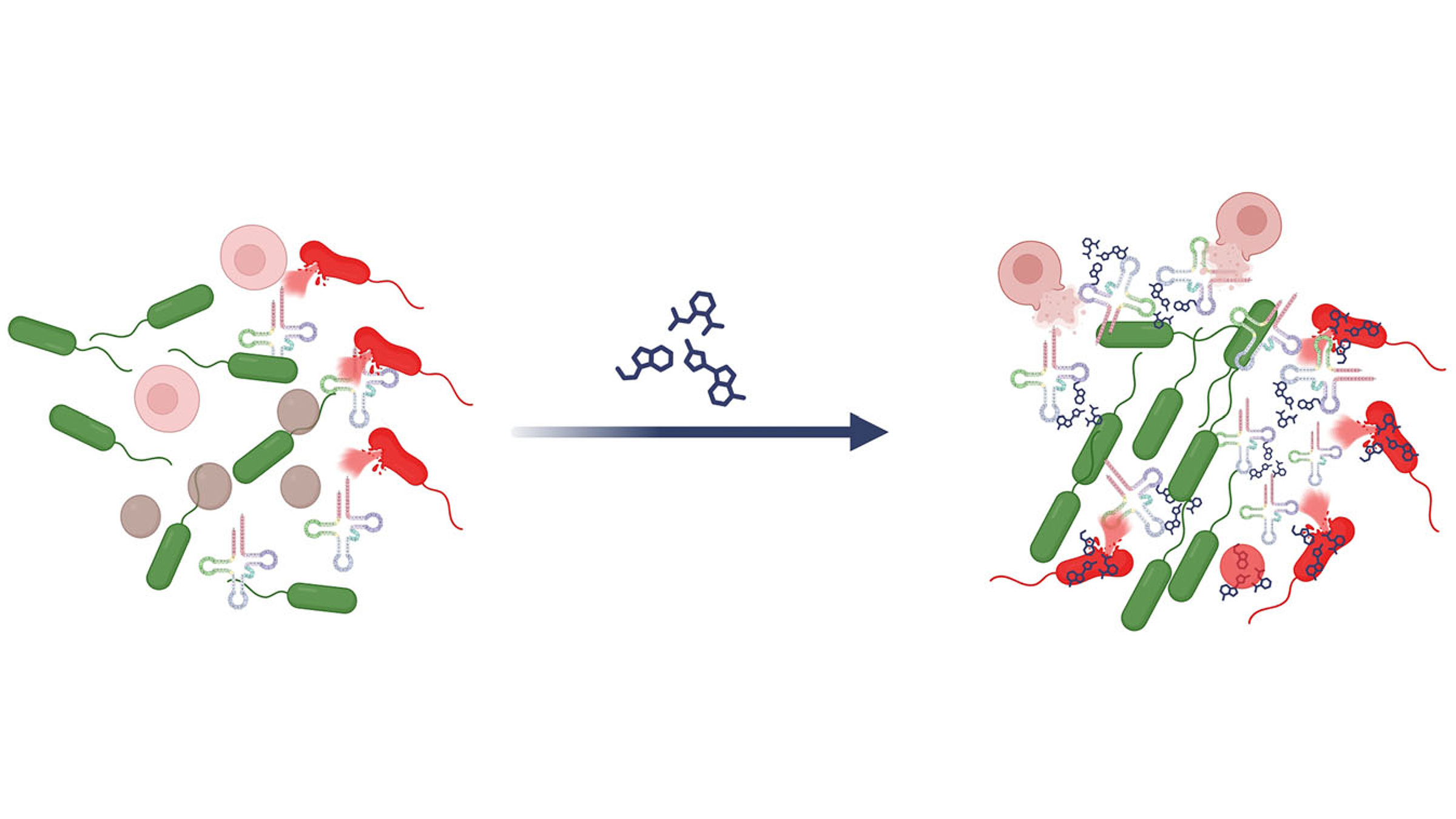
In this illustration, live bacteria are green, dead bacteria are red. When antibiotics kill individual bacteria by bursting them open, the dead bacteria release RNA (jack-shaped structures) that can “mop up” antibiotics (chains of six-sided rings) and protect their neighbors. Figure created in BioRender. Kumar (2026) https://BioRender.com/0xw6k7n.
RNA has an inherent negative charge and can therefore bind to positively charged antibiotics, which includes the commonly prescribed streptomycin and neomycin. When the antibiotic lyses (or bursts open) a bacterial cell, the RNA released from the dead bacterium can bind and trap the antibiotic, preventing it from attacking live bacteria.
“This work can be extended to other bacteria, like Staphylococcus aureus or Pseudomonas aeruginosa,” added Kumar.
An antibiotic-resistant strain of Staphylococcus aureus was associated with half a million deaths on its own in 2021.
This new knowledge of biochemical interactions may improve the effectiveness of future antibiotic therapies, which could be engineered to avoid binding with released RNA. The Harshey Lab is now working to characterize more elements that are released into the extracellular environment when a microbe is lysed that could interact with antibiotics.
Other authors of the study are Marta Perez and Souvik Bhattacharyya.