5 Questions with Public Health Senior Ammad Hasan
The Class of 2026 graduate works to boost heart health, with a legacy that will endure on the Forty Acres.
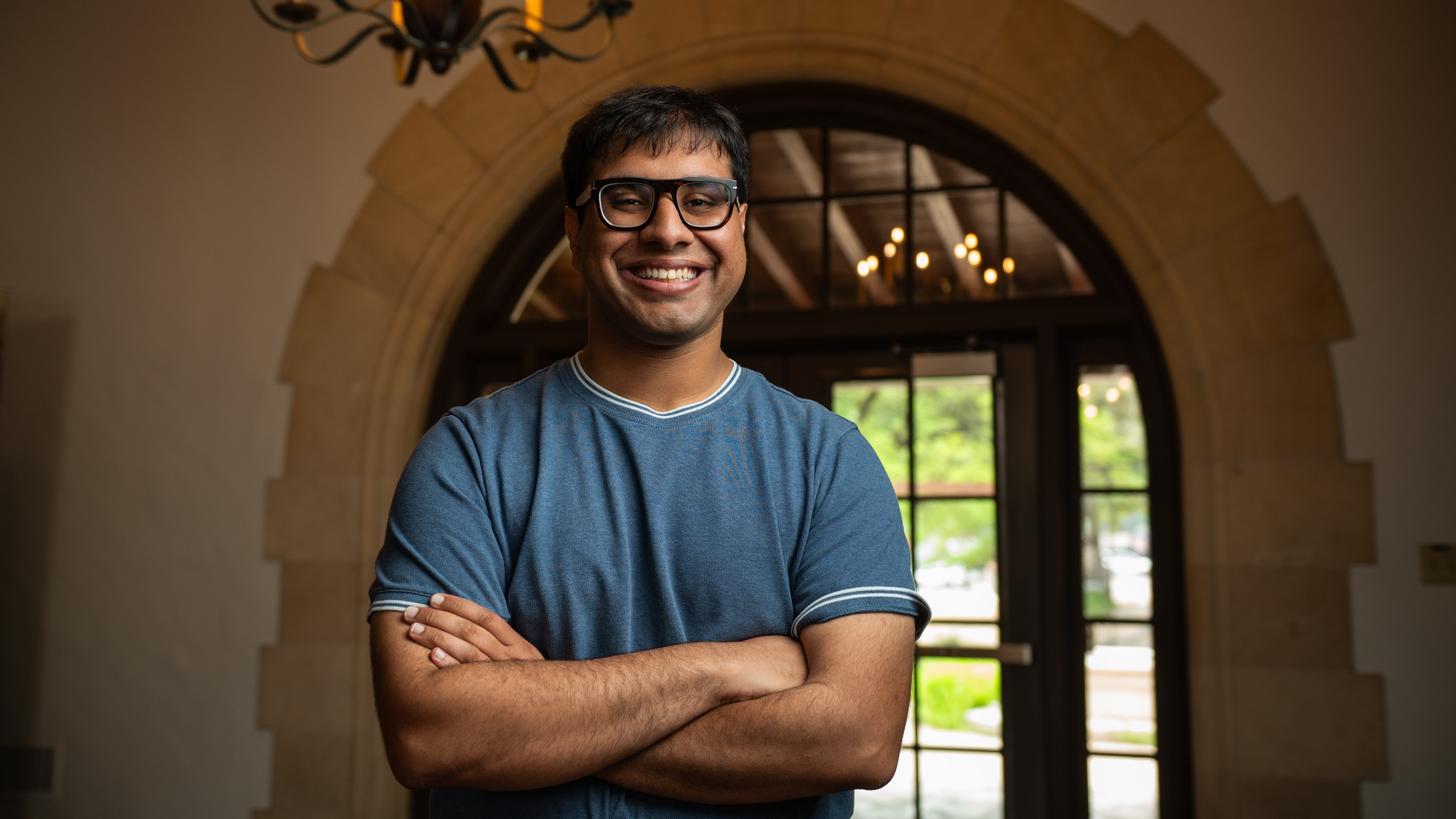
Ammad Hasan. Photo credit: Eileen Chong.
This week is National Public Health Week, and public health senior Ammad Hasan is preparing for the graduation stage and a future in the healthcare industry. A first-generation college student from the Dallas-Fort Worth area, he also mentors first-generation students and has mentored fellow researchers in the Freshman Research Initiative. Hasan recently co-founded the UT chapter of the American Heart Association’s “Heart Club” and secured a grant to expand CPR training on campus (the only one at a Texas university). This will augment offerings from RecSports and the School of Nursing. We sat down to talk about his time at UT in an interview that has been edited below for space and clarity.
Why did you choose to major in public health?
I was very interested in how certain groups of people access healthcare and why some aren’t able to access it at all. Why do people engage in certain health behaviors? Why do certain populations, for example, have higher rates of cardiovascular disease? So I wanted to answer those tough questions, and I felt like public health was where I could explore those questions and learn how to be an advocate for my future patients. My long-term goal is to pursue a career in cardiology. But I’m also very people oriented. I found that public health blends science and working with people. It’s been one of the best decisions I’ve made.
What inspired you to start, and pursue a grant for, the Heart Club?
Last summer, I received an American Heart Association research fellowship that enabled me to participate in a Summer Undergraduate Research Experience program at Texas Tech. Through that program, I learned about the AHA’s Heart Clubs, which are groups of college students who are motivated to pursue careers in cardiovascular health and be advocates of cardiovascular health on college campuses. UT didn’t have a Heart Club, so I called my friend, Deepa Sunkad, who’s majoring in cell and molecular biology, and told her what a Heart Club does and how they want to make CPR education more accessible and visible on campus, so people can develop their own self efficacy in performing CPR. I shared with her that less than half the people who have cardiac arrest outside of a hospital receive CPR. There’s also a big stigma around performing CPR. Even if people are trained, they often don’t feel confident in doing it. It’s called the bystander effect. To get people to successfully perform CPR in the real world, the AHA has stated that they need continuous exposure to the skill, not just a one-time training. That motivated us to start the club.
With the support of our club advisor, Dr. Felkner, we recently received a “Nation of Lifesavers” grant from AHA that provides 30 CPR mannequins and AED kits and stimulators. Our plan is to set up at accessible locations around campus where students can come and practice the skill and be repeatedly exposed to it. I’ll be graduating this May, but our board will be carrying this mission forward next semester.
What has your experience mentoring students through First-Gen Longhorns been like?
I came to this campus not really knowing anyone, not knowing how to navigate college systems, not knowing how to register for classes, where to apply for jobs, how to build resumes, all these questions. I was paired with a first-gen mentor who helped me land my first job and that helped me pay for the first few years of school — definitely a big achievement for me, and it would not have been possible without that program. So the next year, I became a mentor, and for the past three years, I’ve mentored a plethora of students from diverse backgrounds that come on campus not really sure how to navigate the University. Being able to be a voice for them and support them and show them the possibilities that are available for them has been very impactful for me. And the first-generation community has been a powerful source of support to me throughout my four years.
Did being in the Freshman Research Initiative’s Bioactive Molecules research stream help open any doors for you?
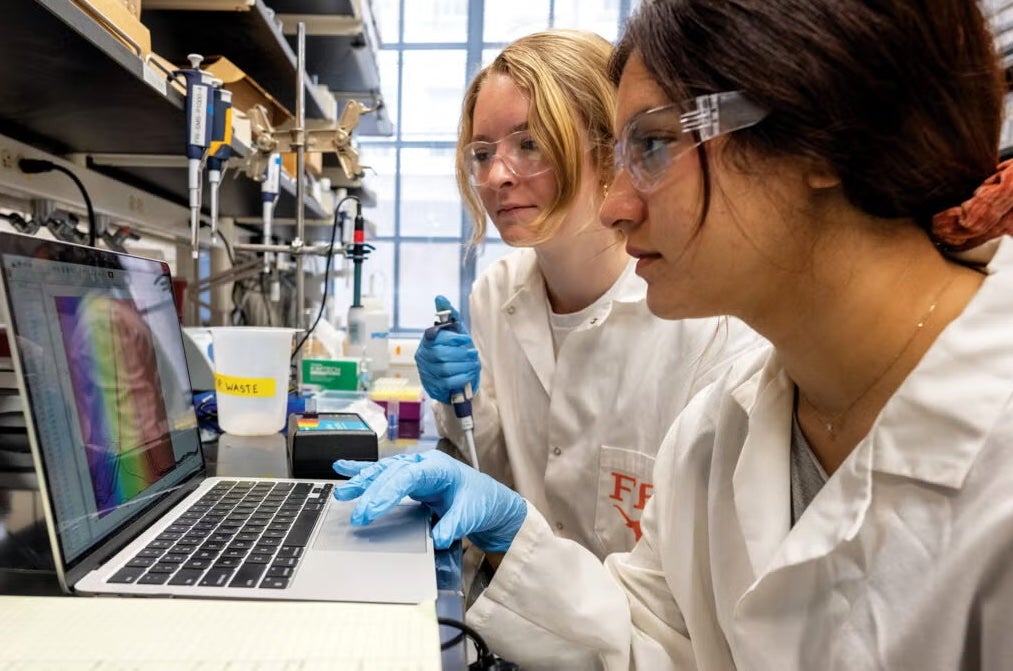
FRI definitely helped me gain opportunities. It was the first time that I got to engage in wet lab research. I got to develop confidence and have conversations about research topics with [research stream faculty lead] Dr. Ilardi. It was the first time I wrote research reports and kept a lab journal. I learned how to give scientific presentations. Later, during my SURE program, I applied these skills to write a research poster that was selected to be presented at the largest cardiovascular conference in the United States.
I also gained useful communication and mentoring skills. After my first year in FRI, I helped teach freshmen who came into the lab. I got to use those skills again last summer in my American Heart Association research fellowship because there was a high school student that had come to participate in the lab, and I was able to successfully mentor and support that student, too.
Do you have any advice for incoming students?
One key lesson I’ve learned is how you make the most impact through collaboration. The most effective solutions in Heart Club come from when you have different perspectives and different people working on an issue together. We have biochemistry students, public health students — freshmen, upperclassmen — all engaged in this work to help shape how we approach the club.
Another piece of advice: get used to failing. As a student, I’ve dealt with a lot of failure. Looking back today, those failures really helped shape me. They gave me the resilience in the face of struggle to keep moving forward. Now I know after graduation, if I pursue any opportunities and fail, I know that’s just part of the process. Some students think you need to be at the top of your class and be perfect in everything you do. But I didn’t fit that mold. Had I given up, I don’t think I would have had some of the experiences that I’ve had. So don’t give up. Don’t let failure get in the way of your dreams.