Students Win Science Award for Bio-Inspired Fabric Sealant
College of Natural Sciences students developed an innovation that could mean safer ways of making clothing water-resistant.
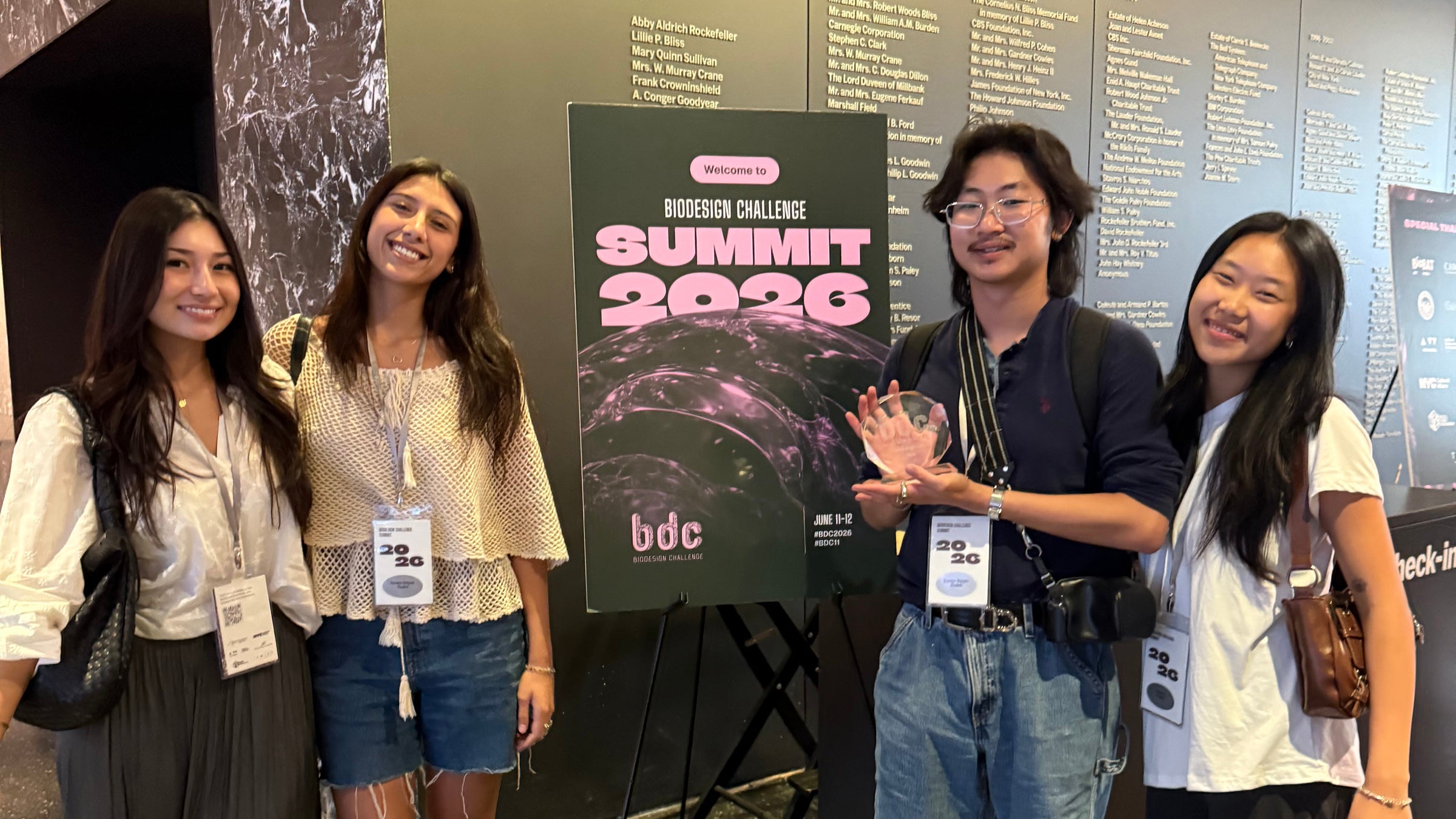
Students from the Freshman Research Initiative—(left to right) Selina Bakieva, Nahomi Vasquez, Brandon Nguyen, Joanna Du and Ella Baird (not pictured)—won the Outstanding Science Award in the 2026 Biodesign Challenge.
This summer, a team of undergraduate students who first met in UT Austin’s Freshman Research Initiative (FRI) won the Outstanding Science Award in the Biodesign Challenge, an annual competition held in Manhattan and focused on applications at the intersection of biotechnology, art and design. Student teams from more than 60 high schools and universities in more than 20 countries traveled to New York to compete.
The students—Ella Baird, Selina Bakieva, Joanna Du, Brandon Nguyen and Nahomi Vasquez—were enrolled in the Sustainable Fashion Materials FRI research stream, taught by research educator Jessica Ciarla, an associate professor of instruction in the Division of Textiles and Apparel. They presented the results of their research to judges at the Parsons School of Design and the Museum of Modern Art.
“Our class focus for the Biodesign Challenge was to merge the disciplines of art, science, and sustainability to create solutions to problems that negatively affect people in the fashion industry,” Ciarla said.
The students invented a protein-based sealant derived from corn and beeswax that could be applied to activewear to replace the chemical sealants currently used for moisture-wicking, water resistance and stain resistance. Currently, these products gain these properties with PFAS compounds, some of which have been linked to harmful health effects in people.
Based on their market research, Nguyen said cotton is one material where their sealant could have tremendous commercial potential.
“Sixty seven percent of consumers would be willing to pay more for cotton activewear if it had the desired performance features,” Nguyen said. “Eight in ten consumers want more cotton activewear options. This tells us something really important. The market is simply waiting for cotton to perform better.”
Ciarla explained why designers have shied away from using cotton in activewear.
“We like to wear cotton because it’s cooling, but when you work out, you sweat and the fiber doesn’t wick,” Ciarla said. “You could make a sustainable organic cotton version of a product and then add the sealant to the material, and it would be incredibly therapeutic and non-toxic and provide the same results in terms of activewear.”
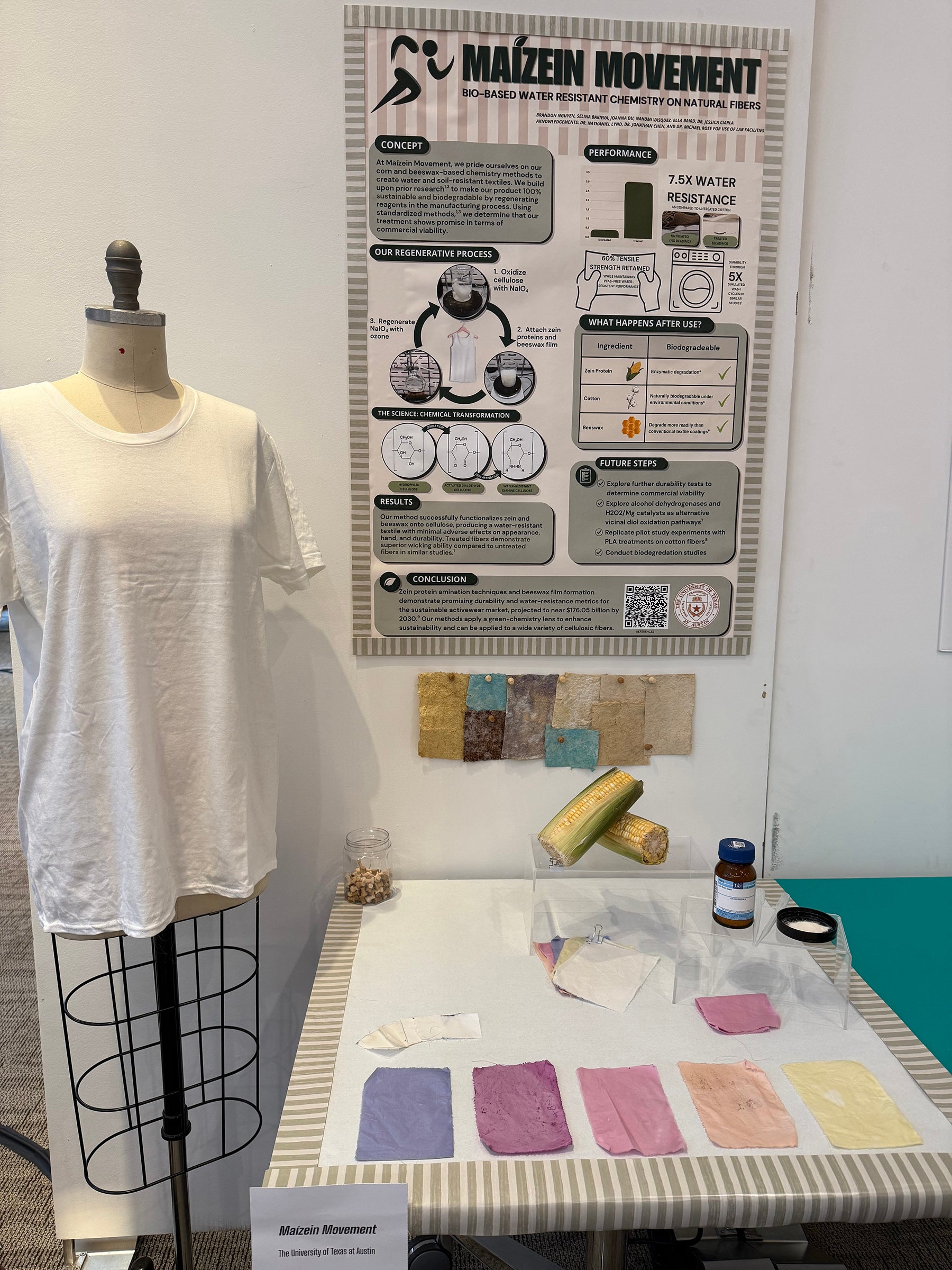
Ciarla also reflected on what the students gained from the experience, beyond developing a potential solution to one of fashion’s persistent challenges.
“Beyond the award, students learned how to conduct market research to understand the commercial potential of a product and its financial viability,” she said. “They also gained confidence in presenting their work to different audiences by learning how to make a pitch deck and how to verbally and non-verbally communicate in terms of your energy, your positioning, storytelling and marketing.”
This project doesn’t end with the students’ award-winning presentation in New York. Nguyen is continuing the development of the sealant for his master’s thesis, working with Ciarla and with Nathaniel Lynd, an associate professor of chemical engineering and principal investigator for the Sustainable Fashion Materials stream. They also plan to apply for grants and partner with other scientists and industry to commercialize the sealant.
Ciarla was recently appointed as a Discovery to Impact Ambassador to help bridge the gap between research and commercialization for more students beyond this project.
In 2024, another former FRI student and recent UT graduate, won the top prize at this same competition after working in UT’s Ecocentric Future Lab. Anya Koehne, class of 2026 biochemistry graduate, developed a precursor for a type of probiotic pill that could help break down plastic pollution and convert it to organic material.
Emily Ramos contributed reporting for this story.
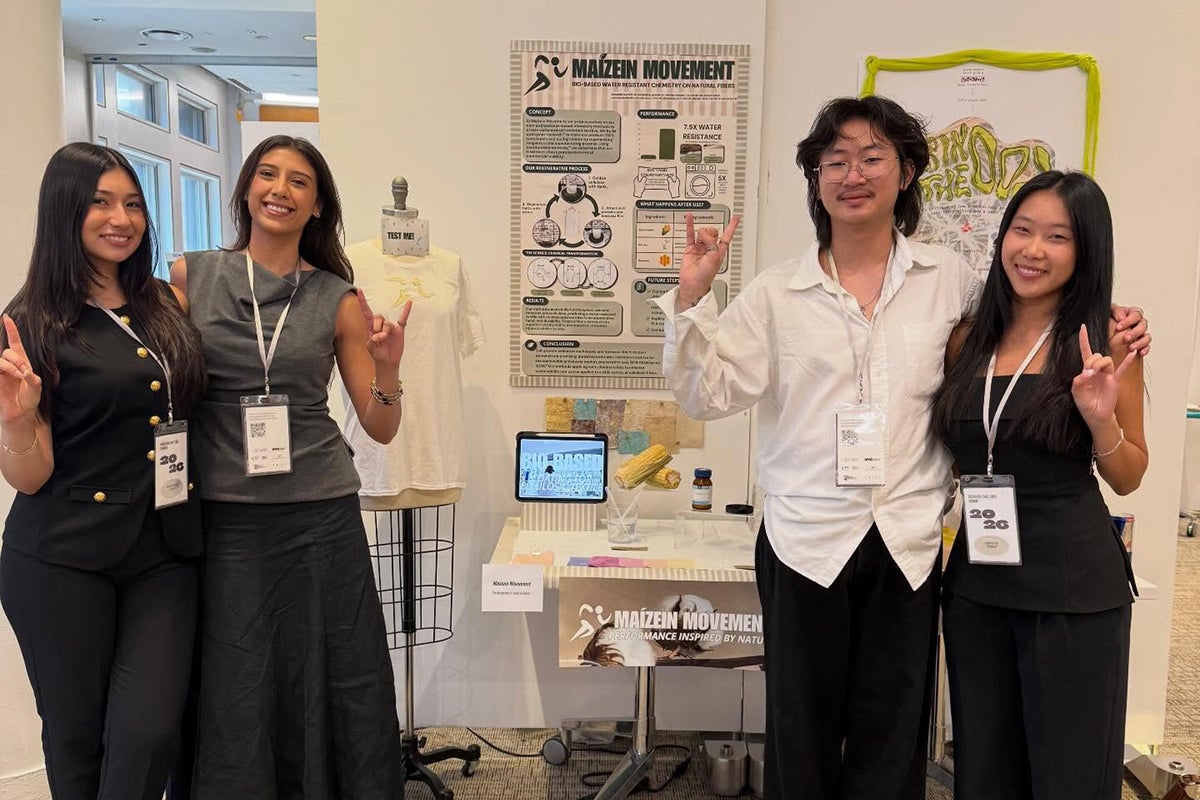
Students from the Freshman Research Initiative—(left to right) Selina Bakieva, Nahomi Vasquez, Brandon Nguyen, Joanna Du and Ella Baird (not pictured)—won the Outstanding Science Award in the 2026 Biodesign Challenge.