Limited Connections: How Stress Affects Our Brain
A study by Alison Preston and colleagues focused on how old and new memories are integrated in the hippocampus.
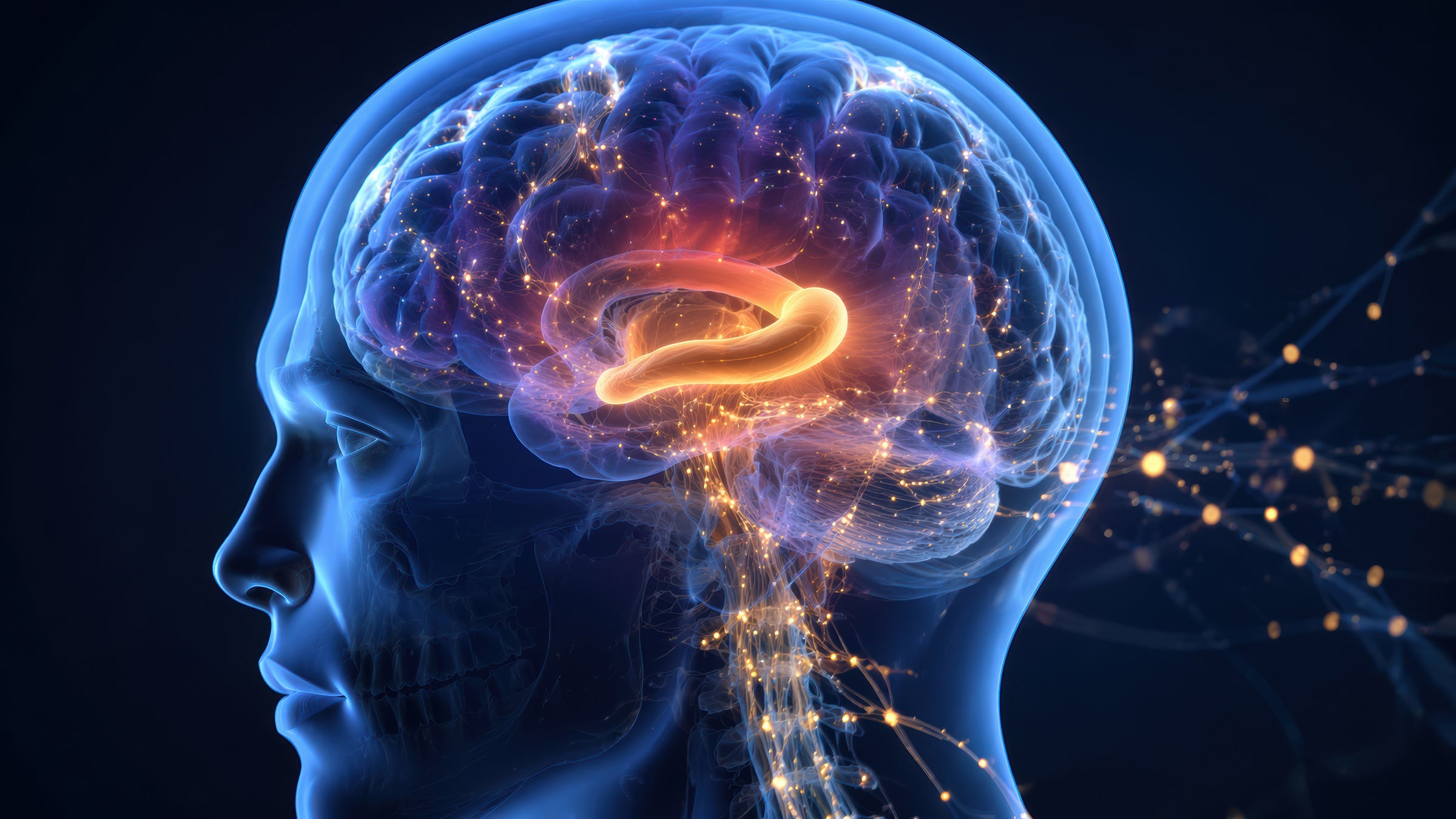
Our brains automatically compare new information with existing memories and link them together. Through this memory linking, we build knowledge. An international research team led by Lars Schwabe, a professor of cognitive psychology from the University of Hamburg, and including Alison Preston, a professor of neuroscience and psychology at The University of Texas at Austin, has now demonstrated that acute stress negatively affects the brain’s ability to link experiences in memory. The study was published in Science Advances.
Here’s a practical example: If a friend shows you her new blue scooter and you later see it parked in front of the library, your brain automatically combines the existing information with the new information to conclude that your friend might be in the library. In psychological research, these flexible conclusions—which go beyond direct observations—are called inferences.
The current study focused on the effects of stress on these processes—particularly on the reactivation of familiar information. Preston helped conceive of the study and develop its methodology.
“Here, we wanted to understand how acute stress impacts our ability to draw new conclusions from our experiences,” Preston said. “We hypothesized that stress might narrow focus to the present moment, reducing the amount that someone recalls of past related experiences and limiting their ability to make connections among events.”
As part of the study, adult participants had to memorize various pairs of images (A+B) on the first day. The next day, they learned other pairs of images that overlapped with the content from the first day (B+C). Later, the researchers tested whether the participants could make the connection from A to C. To observe how stress impacted participants’ ability to make novel inferences, one group was deliberately put under stress at the start of the second day through a simulated job interview and difficult math problems. The other group, in contrast, performed only a stress-free control task.
Using functional magnetic resonance imaging (fMRI), the researchers were able to see which areas of the brain were activated during the processing of the individual images. The focus was on the hippocampus, a brain region central to memory. It turned out that the stressed test subjects were able to remember the second pairs of images (B+C) as well as the control group. However, they were less likely to reactivate the prior, related event (A+B) when viewing image pair B+C. As a result, stressed participants had more difficulty making the connection from A to C during the final inference task.
“These results suggest that stress limits focus to the present, which while adaptive in many ways, also has negative consequences by limiting one's ability to derive novel insights across multiple experiences,” Preston said. “Stress makes us less flexible decision makers.”
These findings are significant for various fields. It is known, for example, that various psychiatric disorders such as psychoses or anxiety disorders can impair the ability to draw conclusions.
“Impaired integration of overlapping memories is also relevant in a legal context when it leads to false conclusions or unjustified accusations. And in education, the linking of related information is the foundation for long-term learning success,” says Schwabe. Therefore, understanding the influence of stress on memory integration is an important starting point for interventions and therapies.
Adapted from a press release by the University of Hamburg.