5 Questions with Archer Graduate Fellow Christina Lildharrie
A Ph.D. student in neuroscience, she is exploring science, service and public policy in the nation’s capital.
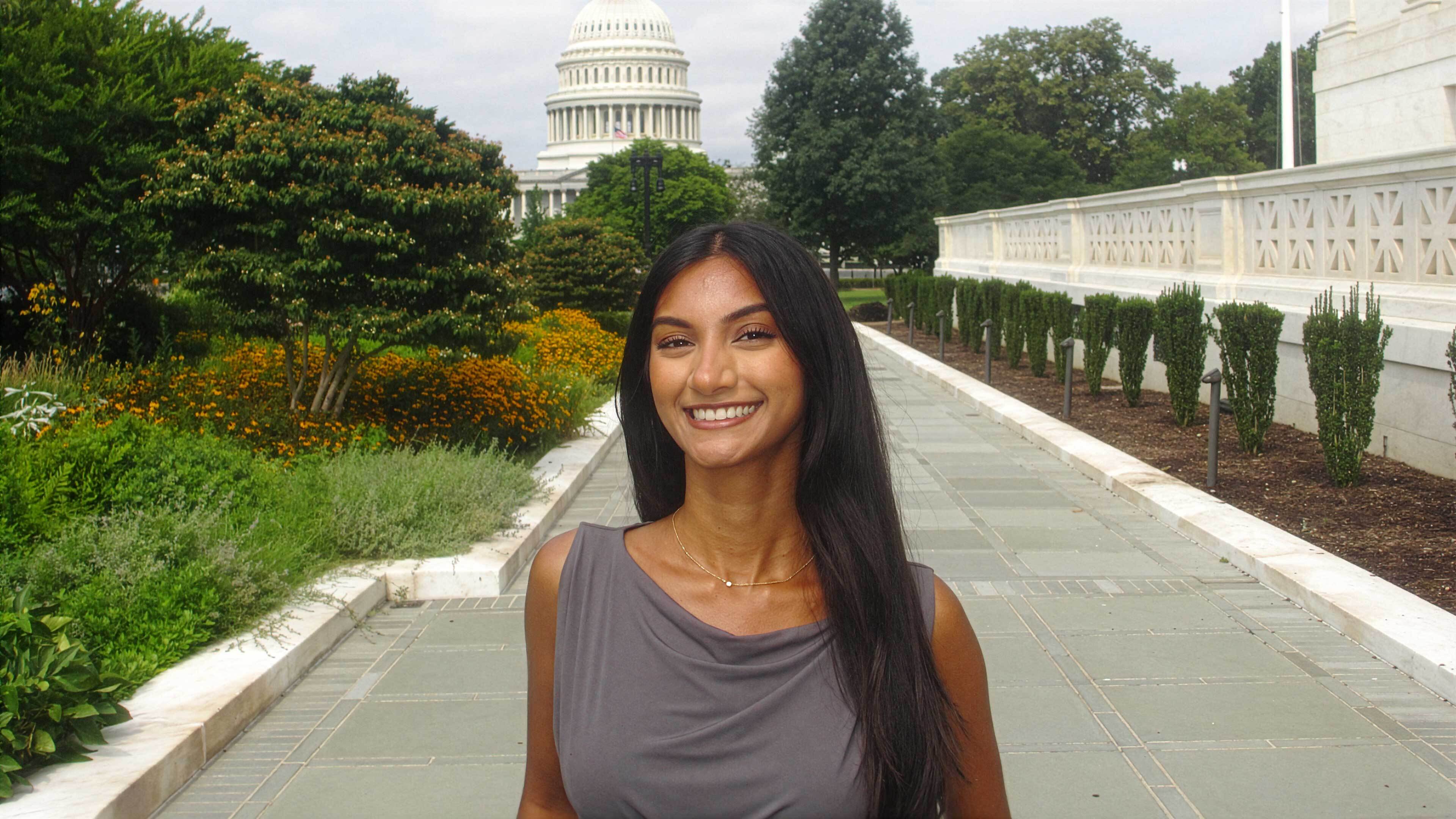
Christina Lildharrie, a Ph.D. student in neuroscience at The University of Texas at Austin, is spending her summer in Washington, D.C., learning how neuroscience and public policy can work together to create meaningful change. She’s one of 50 students selected from across The University of Texas System for the Graduate Archer Fellowship Program.
“I’m really grateful to UT because I don’t think a lot of schools have opportunities like the Archer Fellowship for students in science to explore paths other than academia that also contribute to their research interests,” Lildharrie said, “and it’s one of the driving reasons why I chose UT.”
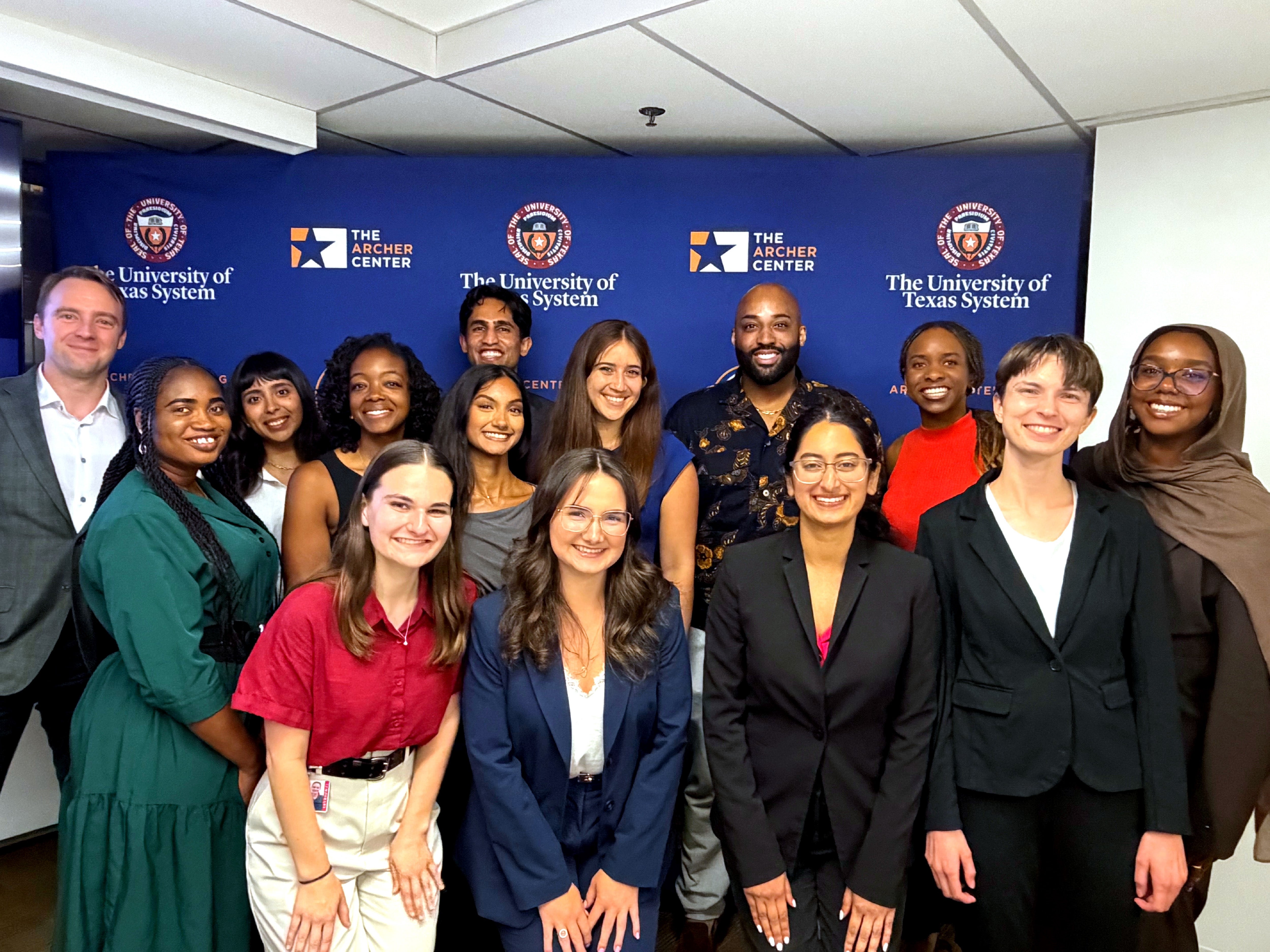
The late U.S. Congressman and UT alum Bill Archer founded the Archer Center responsible for the fellowship in 2001 “to develop public- and private-sector leaders who understand the federal policymaking process, can solve relevant policy problems, contribute to improved civic engagement and civil society, and elevate the public discourse about policy and politics.” Archer Fellows intern across the White House, Capitol Hill, federal agencies, nonprofits and international organizations.
Originally from New York, Lildharrie earned her undergraduate degree at Drexel University in Pennsylvania, where she studied neuroscience and the criminal justice system, before conducting addiction research at the National Institutes of Health. Now she’s entering her third year at UT under the mentorship of Elizabeth Lippard, associate professor of psychiatry at Dell Medical School.
We recently asked her about her experience as an Archer Fellow. The conversation was edited for length and clarity.
Where does your interest in neuroscience, policy and public service come from?
My interest in this intersection comes from my lived experiences. When I was in high school, I was caught amid a mall shooting. I wondered why someone would make a choice that could endanger another’s life. I realized that there are many factors that influence choices and having this experience motivated me to pursue research understanding the biological and environmental factors that shape people’s perception and behavior.
I was drawn to UT because of the labs that were relevant to my research interests in understanding the effects that negative life experiences have on the brain, the support I felt from the faculty, and the opportunity to participate in the Archer Fellowship to develop experience in policy as a scientist.
What kind of research do you do?
My research is focused on understanding differences in the way people perceive social information. I’m interested in understanding how childhood trauma and negative life experiences throughout someone’s life affects how they see the world. And how do these differences relate to risk for negative outcomes like addiction, suicide, or psychiatric relapse over time? To study this, we scan brains of individuals with bipolar disorder over the course of 3 years. Following up with the same individuals throughout the study allows for us to study changes over time.
What have you been doing in your summer fellowship in Washington, D.C.?
As part of the fellowship, I’m interning at CASA DC, which stands for Court-Appointed Special Advocates for Children of DC. CASA DC advocates for foster care and juvenile justice-involved youth. As a policy intern—a position that they actually created for me after I expressed my interest in the work that they do—I’m building a legislative advocacy team for them. This involves a group of volunteers and CASA DC staff going to congressmen and congresswomen to advocate for policies that are relevant and would be supporting the youth that we serve. To do so, I planned the very first CASA DC Capitol Day where we knocked on the doors of senators and representatives on Capitol Hill to educate them and their legislative staffs about the important work CASA DC does.
Being able to share stories with the people that are creating and influencing policies that affect system-involved youth is really important. It helps us bridge that gap between the youth and volunteers experiencing and witnessing the hardships on the one hand, and the people that are creating legislation that reform the system on the other.
As Archer fellows, we are also each working on a paper and presentation where we choose a policy problem that’s important to us, and then we spend the entire summer researching this problem and suggesting potential solutions. My policy paper is on prioritizing the well-being of youth with domestic abuse history, merging my research interests as a neuroscience Ph.D. student and an intern at CASA DC. Research shows correlations between domestic abuse history and mental health concerns, suicidality, substance abuse, and legal system involvement. Through my policy research during Archer, I learned about federally-funded Training and Technical Assistance centers that improve mental health for youth in the child welfare system. They do so by increasing collaboration between child welfare and mental health systems and creating knowledge hubs drawn from research. Having this policy experience taught me the relevance and importance of translating scientific research into practice.
What are your plans after graduate school?
When I complete my Ph.D., I would love to have my own lab that continues researching how negative life experiences affect the brain and behavior, and to intentionally collaborate with labs and organizations in policy to be able to translate the science into meaningful change and reform.
I’m glad I’m able to draw from my personal experiences to fuel my passion for amplifying the voice of vulnerable populations and to be able to advocate for changes on a larger scale. To be able to support youth and improve their positive outcomes is very rewarding. During and after graduate school, I want to keep advocacy at the forefront of the work I do.
What have you learned and enjoyed during your time in D.C.?
I really love the interdisciplinary collaboration that you get with this fellowship. I’m the only neuroscience student in the program, so having conversations with passionate individuals from different fields, universities, and backgrounds that I probably wouldn’t have met otherwise, is one of the best parts. I think that’s where policy change happens, where we can all bring our personal and professional experiences and have the same desire for societal reform. We all care about being public servants and leaders. It’s really special.
What have I learned? How important people are. I attended the U.S. Commission on Civil Rights briefing on mental health in juvenile justice facilities, and I was in awe of all the speakers. There were panelists of lawyers, judges, policy experts, researchers, community advocates, and those with lived experience. I felt honored being in a room filled with people willing to share their work, stories, and personal testimonies to work towards a common goal. A story is so much more powerful than I realized.
I really value public service, and I think it’s important to have multiple interests and passions outside of what you’re doing day-to-day. As a researcher, I love scanning brains, conducting clinical interviews, and analyzing the data to answer questions I’ve always wondered. I also love knocking on senators’ and representatives’ doors on Capitol Hill explaining why they should care about child welfare and juvenile justice reform. Although I’m not directly doing science right now, I feel really fulfilled knowing that I have the scientific perspective, and I can do public service alongside that.