Scientists Map Proteins From Ancient Organism and Discover New Links to Rare Diseases
New ‘treasure map’ of ancient life holds clues to modern human diseases.
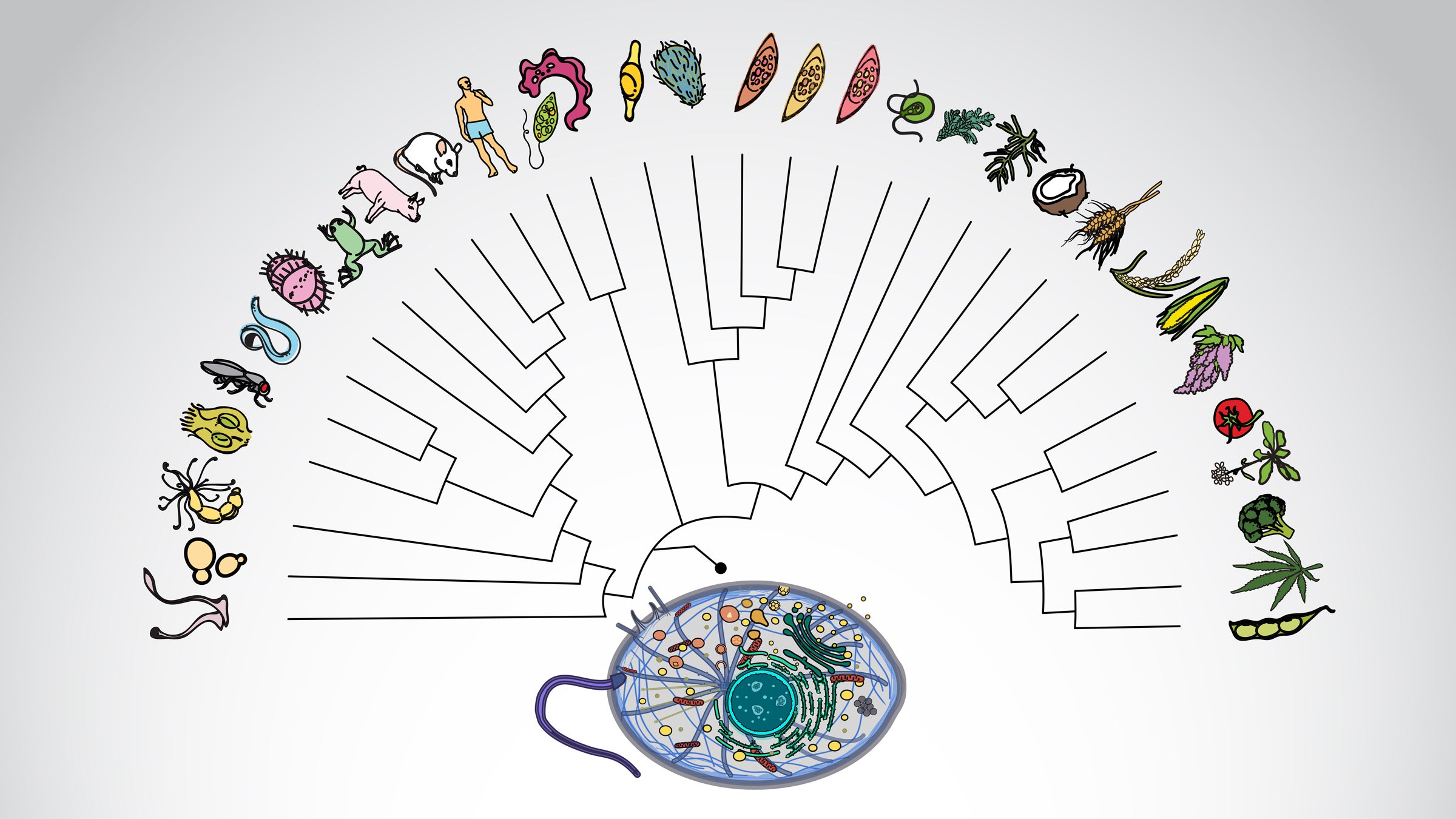
A University of Texas at Austin-led team used proteomics data from 31 eukaryote species, including humans, spanning ~1.8 billion years of evolution to reconstruct the protein interactome of the Last Eukaryotic Common Ancestor (LECA). Illustration credit: Angel Syrett/Elinor Marcotte/University of Texas at Austin/SwissBioPics.
By comparing groups of proteins found in a wide range of species and by analyzing animal models and human patient data, a University of Texas at Austin-led team has identified genes previously unknown to be connected to three rare disorders, a discovery that sheds new light on the genetic causes of human diseases.
The research team made the discovery by reconstructing the most detailed map to date of the molecular machines that carried out the functions of life in an ancient ancestor that gave rise to all complex life on Earth, including humans. This representation of protein networks, known as the protein interactome and published in Cell Genomics, is like a treasure map the researchers used to dig up hundreds of genes that weren’t previously known to be associated with human diseases.
The cells inside every living thing are like microscopic cities with molecular machines that make energy, transport supplies from place to place, build structures and get rid of trash. Because these machines are so critical for the survival of an organism, versions of them have been passed down over more than a billion years of evolution. Molecular machines are made of proteins, which are produced with instructions stored in genes. And because these ancient molecular machines are so important for life, when one of the genes that helps build them breaks, it can lead to serious diseases in humans.
“There was a huge range of diseases that we could predict pretty well, just using ancient protein complexes,” said Rachael Cox, a former UT Ph.D. student who led the data analysis in the lab of corresponding author Edward Marcotte, a professor of molecular biosciences. The team found links to three rare diseases so far, but other diseases almost certainly have similar links.
The data analysis that made the discovery possible was enabled by Texas Advanced Computing Center, a National Science Foundation-supported center based at UT that offers the most powerful academic supercomputing capabilities in the nation. The new research was funded by grants from the National Institute of General Medical Sciences, the National Institute of Diabetes and Digestive and Kidney Diseases, the National Institute of Child Health and Human Development, the Army Research Office and the Welch Foundation.
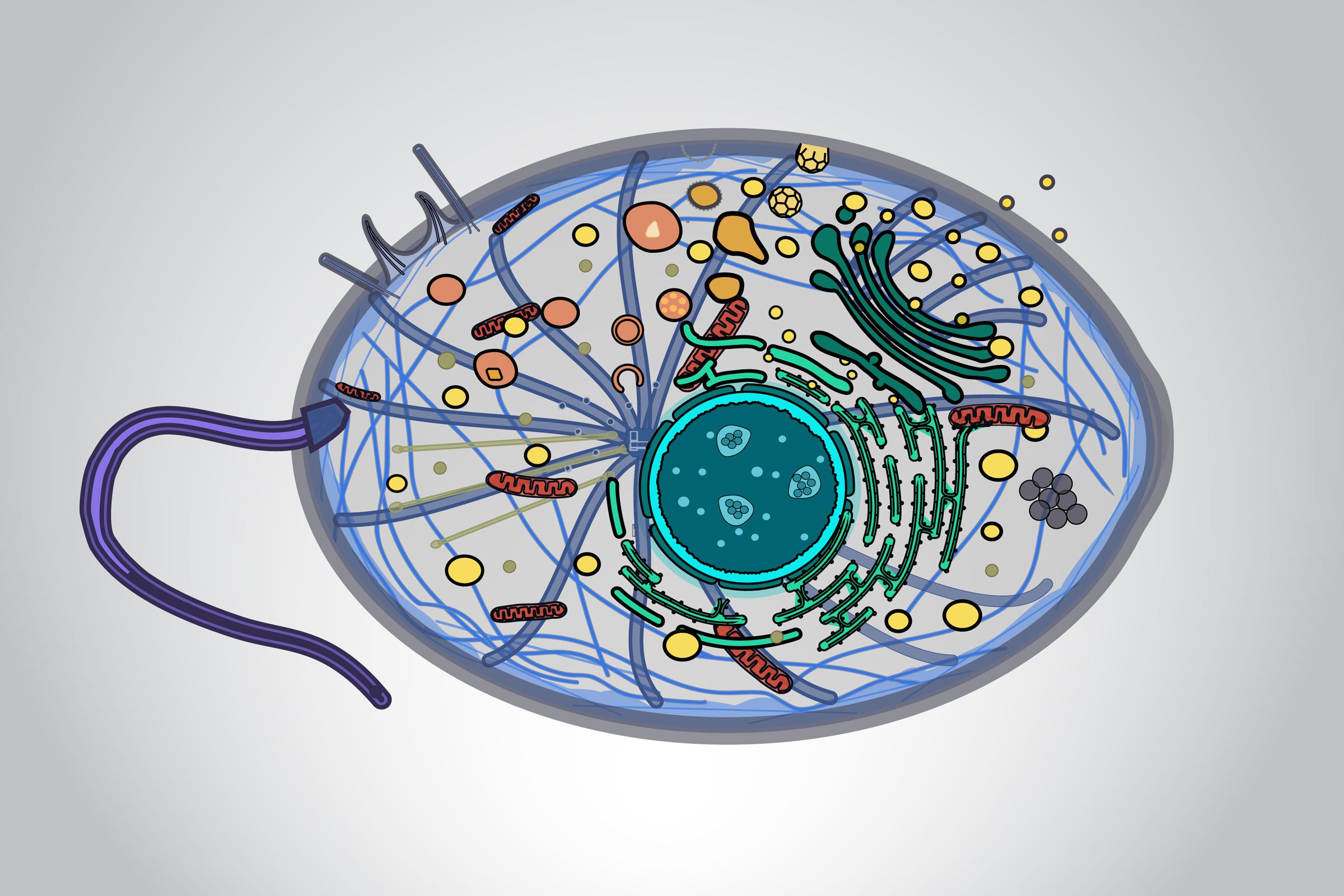
Inferred subcellular organization in LECA, the last eukaryotic common ancestor, based on its estimated gene content. Cell illustration adapted from multiple graphics shared as open source by SwissBioPics.
Finding Gene-Disease Associations
Problems with a faulty gene having ancient roots in the map could be tied to issues across the evolutionary tree of complex organisms, also known as eukaryotes. For example, a gene that can cause a form of deafness in humans can also cause plants to be unable to sense which way is up or down, disrupting normal growth.
Given this connection between genes, molecular machines and disease, the researchers were able to use their ancient ancestor-based protein interactome — essentially a map of protein networks — to identify previously unknown genes associated with disease.
Scientists speak about the 1.5- to 1.8-billion-year-old single-celled organism from which all complex life on the planet descended as the Last Eukaryotic Common Ancestor (LECA). The research team discovered that about half of all human genes can be traced back to an earlier version in LECA, and versions of these same genes are shared broadly with organisms across the eukaryotic tree of life.
“I think it gives you perspective as a human to look around at all the organisms you can see and realize you’re related to them in some deep, fundamental way,” Marcotte said. “And looking at this little cartoon of this ancestral organism is like looking at your own great, great, great, great, great — to the nth generations back — ancestor. This is the common heritage of complex living organisms.”
Using frog and mouse models, the team confirmed gene associations with three rare human disorders: osteopetrosis, end-stage kidney disease and short-rib thoracic dysplasia. In follow-up studies, the researchers plan to use animal models to experimentally verify whether specific genes revealed by the new map truly are associated with human diseases.
Other major contributors to the project were John Wallingford, Ophelia Papoulas, Chanjae Lee and Tynan Gardner (UT Austin); Dannie Durand (Carnegie Mellon University); and Shirlee Shril and Friedhelm Hildebrandt (Boston Children’s Hospital).
Biological samples were provided by the UTEX Culture Collection of Algae (UT Austin); Johann Eberhart (UT Austin); and the Tetrahymena stock center (Cornell University & Washington University in St. Louis).
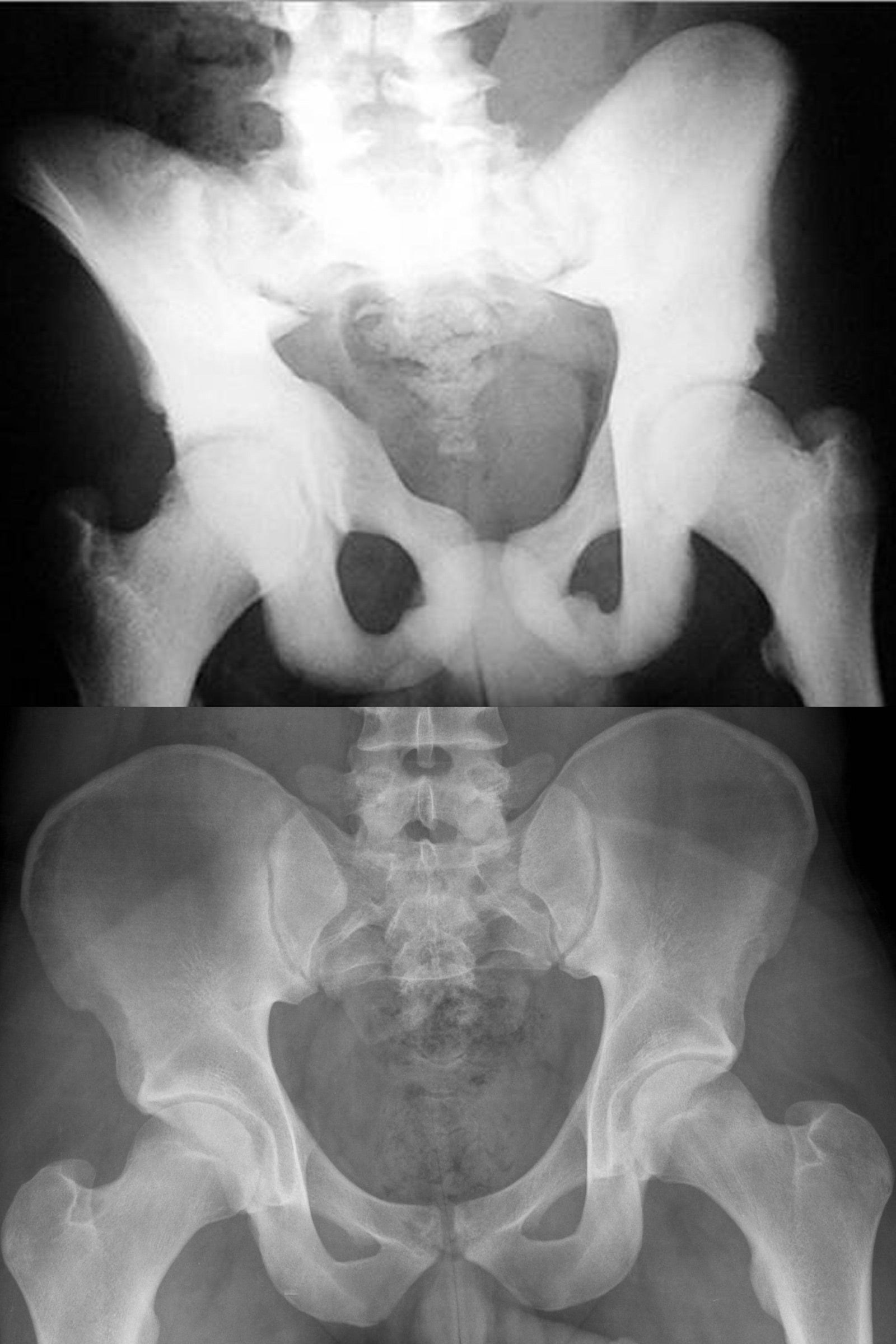
X-ray comparison of a person’s pelvis with osteopetrosis, a disease of excessively dense bones (top) and a healthy person’s pelvis (bottom). Image credits: University of Athens/University of Ioannina/UC San Diego Health.
Reconstructing LECA
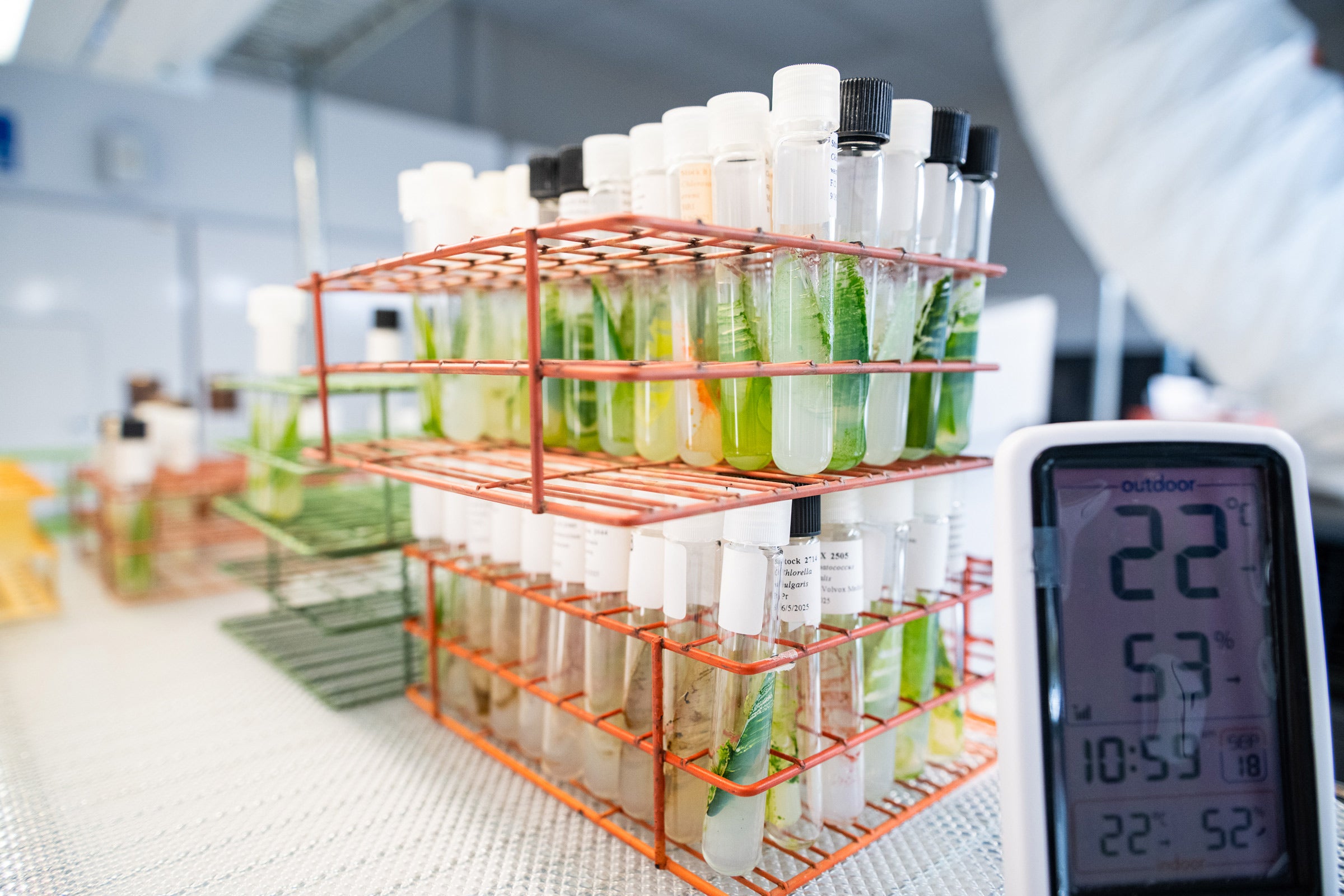
For this project, the researchers first identified genes and proteins shared by 156 organisms across the eukaryotic tree of life. They reasoned that the most commonly shared ones were likely also present in LECA. Next, they asked, which of these ancient LECA proteins tend to stick together to form molecular machines? To answer that, researchers at UT Austin and other labs around the world ground up cells of 31 eukaryotic species and conducted more than 25,000 biochemical experiments to separate different types of molecular machines from each other and then measure their properties with a mass spectrometer. To analyze this enormous data set, they used the Lonestar and Stampede series supercomputers at TACC. This allowed the researchers to reconstruct LECA’s protein interactome, a map showing how its proteins combined to form molecular machines.
“It puts into perspective how close we are to other organisms, relatively on the time scale of Earth,” Cox said. “I look at a fish and I’m like, oh, we’re basically fish. By the time you have a spine, we’re all closely related.”
Once they had LECA’s protein interactome, Marcotte’s team could investigate genetic causes of human diseases. They consulted a database of known gene-disease relationships in humans, Online Mendelian Inheritance in Man. For each disease (e.g., osteopetrosis), they mapped the proteins already known to be associated with it on top of their LECA protein interactome and noticed other proteins that they tend to interact with. This revealed hundreds of additional ancient LECA genes that might also be involved in human diseases.
“Imagine your own social network,” Marcotte said. “You might have a friend interested in basketball. Chances are, they have friends who are also interested in basketball. We use the same idea. If we know some proteins are linked to a certain disease, maybe some of their friends are also linked to the disease. We call that guilt by association.”
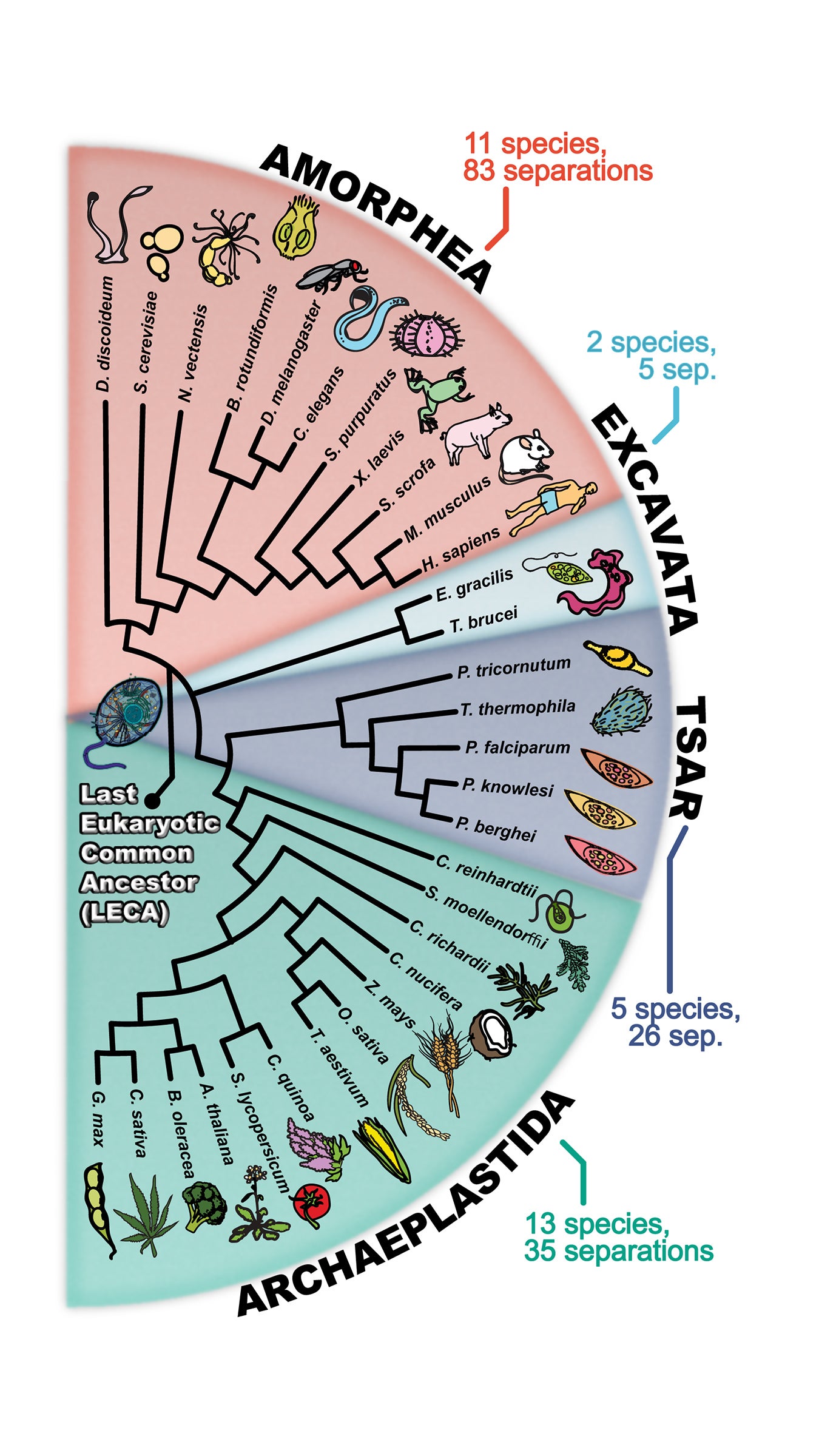
A University of Texas at Austin-led team used proteomics data from 31 eukaryote species, including humans, spanning ~1.8 billion years of evolution to reconstruct the protein interactome of the Last Eukaryotic Common Ancestor (LECA). Illustration credit: Angel Syrett/Elinor Marcotte/University of Texas at Austin/SwissBioPics.