
Science Under the Stars: An Evening with Biodiversity Researchers
Apr
16
2026
Apr
16
2026
Description
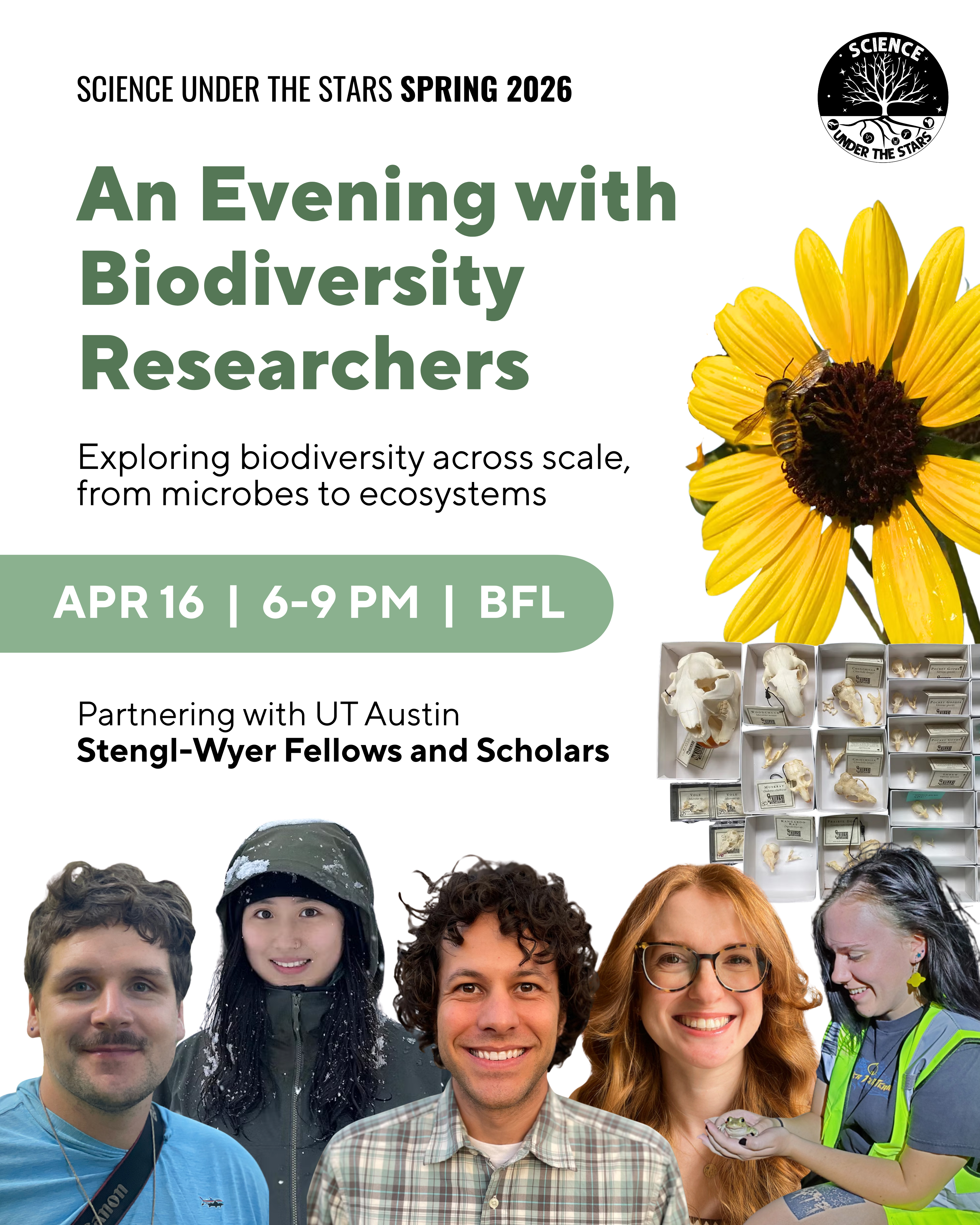
Participating Stengl-Wyer Scholars and Fellows:
Korin Jones is a Stengl-Wyer postdoc working in the lab of Nancy Moran. He is broadly interested in microbiome assembly, host-microbe, and microbe-microbe interactions. The communities of bacteria that associate with animals, often referred to as the microbiome, are often beneficial for their animal hosts. Honeybees, which are deeply tied to our agricultural systems, have developed a small, but consistent microbiome that has similar bacteria regardless of geographic location. In honeybees, the bacteria living within the gut aids hosts in obtaining nutrients, detoxifying poisonous plant compounds, and fighting off diseases.
Rebecca Clemons is a graduate student studying the evolution of immunity in amphibians and understanding how amphibian immune systems respond to pathogens. Rebecca will be running the amphibian disease activity. This activity explores how frogs face tradeoffs between being able to resist disease and being able to reproduce, including how diversity within frog populations is important.
Julia Schap is a Stengl-Wyer postdoc who studies the responses of small mammal (rodent and rabbit) communities to changes in climate. Julia will be discussing how we can use the modern relationship between physical traits of species and climate to estimate climate in the fossil record as well as predict which communities may be threatened to future climate and human land use changes.
Guillaume Dury is a Stengl-Wyer postdoctoral researcher, and his research aims at understanding why tropical insects eat the trees they eat and not other trees based on chemical defenses. Guillaume will have preserved Texas insects to show and will be happy to answer your questions about insects and arthropods.
Dale Forrister is a Stengl-Wyer postdoc who studies how plants use chemical toxins to defend themselves from insect herbivores and fungal pathogens. Dale will talk about how plants are chemical factories producing hundreds and even thousands of secondary metabolites, discussing how humans have used plants’ metabolic potential as sources of therapeutic drugs since time immemorial.
Schedule:
- 6:00 pm: Table activities
- 7-7:45 pm: Guided tour of Brackenridge Field Laboratory (sturdy shoes and water recommended!)
- 8:00 pm: Presentations by Stengl-Wyer Scholars and Fellows
The talk will be held outdoors at Brackenridge Field Laboratory.
Science Under the Stars is a free public outreach lecture series in Austin, Texas run by UT graduate students. Events are held outdoors at Brackenridge Field Laboratory, 2907 Lake Austin Blvd, Austin, Texas 78703. Find schedules and links for each event on the SUtS blog, Instagram, X/Twitter and YouTube channel, or sign up on their listserv to get event notifications.
Location
Brackenridge Field Laboratory