
Listening to Cosmic Collisions: Black Holes, Neutron Stars and the Rise of Gravitational-Wave Astrophysics
Apr
16
2026
Apr
16
2026
Description
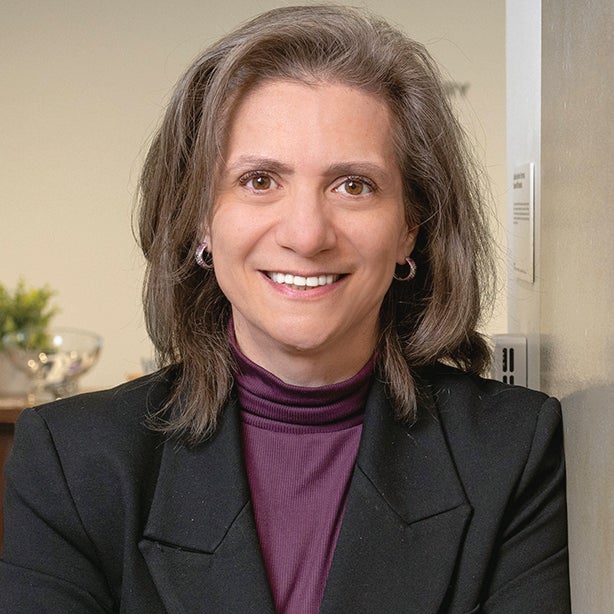
The Steven Weinberg Memorial Lecturer Dr. Vicky Kalogera will guide us through the myriad revelations about the nature of the universe discovered through gravitational wave physics and the exciting potential of increasingly sophisticated instruments in the field in “Listening to Cosmic Collisions: Black Holes, Neutron Stars and the Rise of Gravitational-Wave Astrophysics.”
Abstract
A century before their discovery, Albert Einstein predicted the existence of gravitational waves as a consequence of his theory of relativity. These waves are tiny ripples produced when massive objects accelerate, most dramatically during collisions between black holes and neutron stars.
Over the past decade, observatories such as LIGO and Virgo have made it possible to detect these signals on Earth, allowing us to listen to cosmic collisions that were previously invisible. By measuring gravitational waves, astronomers now probe how massive stars form, interact and ultimately live and die, leaving behind compact remnants that spiral together and merge.
Observations of black hole and neutron star mergers reveal their masses, spins and environments, offering insight into extreme physical conditions inaccessible by any other means. Looking ahead, expanding detector networks and steadily improving sensitivity promise to grow gravitational-wave astronomy from a young discovery-driven field into a mature and far-reaching branch of observational science, with the potential to detect relic gravitational waves from the early universe, an area shaped in part by Steven Weinberg’s work.
Location
San Jacinto Hall Multipurpose Conference Room AB